
Summary
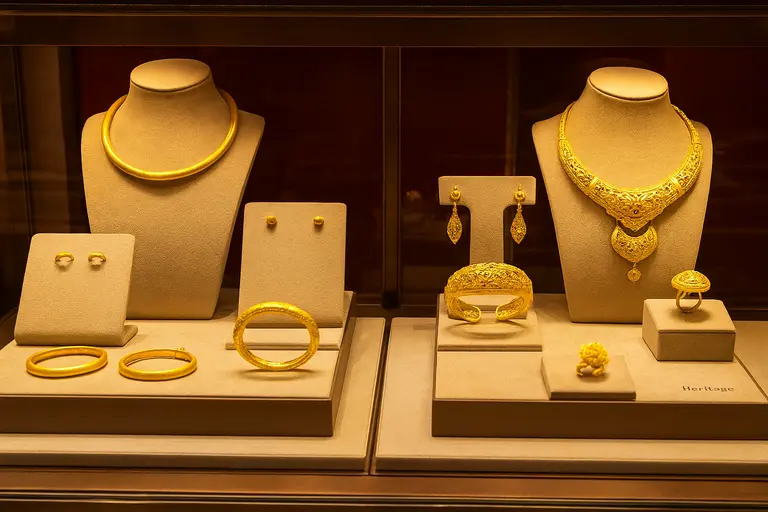
Gold jewellery remains the top performer in China’s 2025 retail market. Despite high prices and competition, spending stayed strong. Hard Pure and Heritage gold items deliver higher profits, while lighter and self-wear pieces dominate sales. Retailers remain optimistic about continued growth.
Introduction
Chinese jewellery trends 2025 show that gold remains the core of China’s retail market. Despite high prices, consumer demand continues to grow, supported by self-wear and Hard Pure gold products.
The World Gold Council’s 2025 Chinese Jewellery Retailer Insights confirms this shift. Even with fierce price competition and consolidation, gold jewellery continues to dominate. Retailers report that self-wear and Hard Pure gold pieces bring both volume and profit.
Reference: World Gold Council 2025 Report
1. Gold Jewellery Dominates Retail Sales
Gold remains the backbone of Chinese jewellery retailing. Retailers surveyed by the WGC confirmed that gold jewellery accounts for most of their sales. Even as the market adjusts to high gold prices, consumer demand continues to rise.
Compared with 2024, over 70 percent of retailers reported an increase in gold’s share of total sales. Gold still holds emotional and financial value in Chinese households.
For Indian readers — especially Malayalis — this mirrors your own culture’s link to gold. It’s both an ornament and a form of savings.
Read more in 24K, 22K, 18K: What Every Malayali Gold Buyer Must Know.
2. Hard Pure and Heritage Gold Drive Profit
Among all gold types, Hard Pure gold and Heritage gold deliver the best margins.
Hard Pure gold is 99.9 percent pure but hardened using advanced technology, making it ideal for light, durable designs.
Heritage gold blends cultural motifs with modern craftsmanship.
The WGC found that 32 percent of retailers saw Hard Pure gold sales rise in early 2025. Heritage gold, on the other hand, brought higher margins through craftsmanship and storytelling.
For Malayali jewellers, this suggests a way forward — develop lightweight collections that mix traditional artistry with wearable design.
Also explore our article Understanding BIS Hallmark: What It Means for Your Jewellery.
3. Lighter Designs, Higher Spending
Even as gold weight per piece declines, total spending has grown. Buyers choose smaller items but value design and purity more.
In the first half of 2025, pieces under 10 grams made up 45 percent of sales, compared to 37 percent in 2023. The lighter format helps keep gold accessible while maintaining luxury appeal.
See Also: Gold Buying Checklist for Malayalis. It shows how to assess purity, craftsmanship, and price transparency.
4. Self-Wear Purchases Dominate
The report highlights a major trend — self-wear. Buyers increasingly purchase gold jewellery for themselves rather than as gifts. This mindset shift defines the modern Chinese consumer: confident, expressive, and practical.
Retailers report that Chinese jewellery trends 2025 continue to favor lightweight designs that balance affordability with emotional value. They expect this segment to keep growing, especially among younger generations.
For Indian jewellers, the message is clear: position gold as personal luxury, not only ceremonial necessity.
You may find our related story, Why Your Heated Sapphire Matters More Than You Think, insightful on how emotion and value intersect.
5. Competition and Market Consolidation
Chinese jewellers face intense price competition and product sameness. Several big chains are reducing their store counts to focus on profitability and differentiation.
This industry consolidation mirrors what may happen in other Asian markets. For India, the takeaway is strategic: stand apart with regional craftsmanship, transparent service, and storytelling that connects emotionally.
6. Retailer Outlook
Despite the challenges, retailer sentiment remains positive. They see continued demand for Hard Pure and Heritage gold. Self-wear and cultural jewellery will likely remain central to growth.
Gold continues to represent trust and value. Even cautious consumers prefer investing in gold jewellery that combines beauty and security.
FAQ
Q1: Why does gold remain dominant in China’s jewellery retail market?
Because it carries both cultural and financial significance. Even when prices rise, consumers see gold as a timeless, reliable purchase.
Q2: What makes Hard Pure gold special?
It’s almost 100 percent pure and strengthened through technology, allowing for fine yet durable designs suitable for daily use.
Q3: How are retailers responding to heavy competition?
By refining design, storytelling, and focusing on premium experiences instead of only price.
Q4: How can Indian retailers use these insights?
Offer lighter gold pieces, promote personal wear, and highlight craftsmanship that tells a story.
Future Outlook for Gold Jewellery in China
Looking ahead, Chinese jewellery trends 2025 will likely sustain gold’s dominance, as buyers see it as both an adornment and financial security. Consumers now seek lighter, wearable designs and buy them for themselves.
For Indian and Malayali jewellers, the lesson is straightforward — adapt product lines for modern lifestyles while honouring heritage. Gold’s future depends not on weight, but on meaning and design.
Credit
Adapted from the World Gold Council’s 2025 Chinese Jewellery Retailer Insights report for educational use on Saju Elizamma.
Original research credit: World Gold Council.