
Summary
The 2025 CIBJO Coral Report, led by Vincenzo Liverino, calls for preserving coral craftsmanship, protecting cultural heritage, and training new artisans. It highlights coral’s artistic and environmental value, urging the jewelry trade to sustain this centuries-old skill.
The Coral Report 2025 Focus
With the 2025 CIBJO Congress opening in Paris on October 27, the CIBJO Coral Commission has released its ninth Special Report.
Prepared under the leadership of Vincenzo Liverino, the report emphasizes conserving human knowledge and skills passed down through generations. These traditions allow coral — a rare biogenic gem — to be transformed into jewelry and works of art.
“We must champion the deep cultural footprint and irreplaceable heritage associated with coral craftsmanship,” writes Mr. Liverino.
If you enjoy traditional gemmaking insights, explore Gemstone Artistry: Balancing Tradition and Technology for a related perspective.
Why Coral Craftsmanship Matters
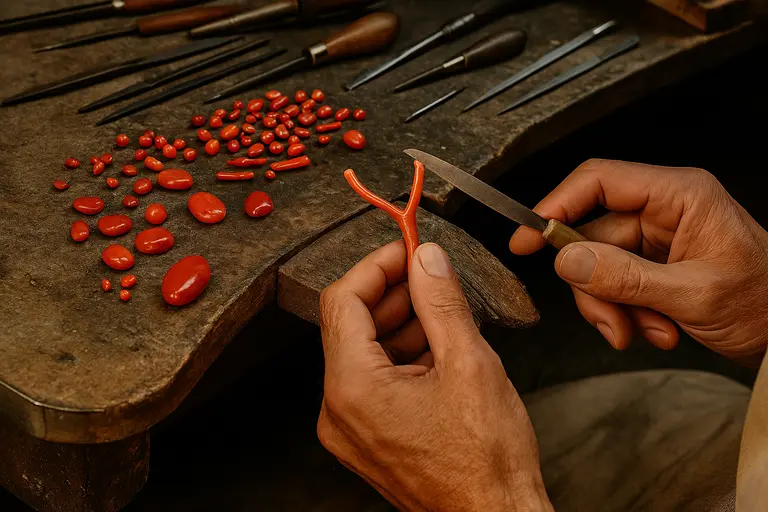
Coral manufacturing depends on highly specialized expertise.
- Artisans in Italy and Asia hold techniques refined over centuries.
- Coral shaping, carving, and polishing require years of training.
- The number of master craftsmen is declining rapidly.
“The sustainability of the industry requires that artisanal skills are not lost. That demands deliberate action,” notes Liverino.
Preserving coral craftsmanship is as crucial as protecting coral reefs themselves. Without skilled artisans, coral’s story in jewelry would fade.
You can read more about preserving gem arts in Gemstone Careers and Craft Revival.
CIBJO Academy and Education
To address this challenge, CIBJO has launched the CIBJO Academy, a platform designed to educate trade professionals on:
- CIBJO standards and best practices
- Sustainable coral use and ethical sourcing
- Updated versions of the Coral Blue Book and Coral Guide for Customs
“The CIBJO Academy will give significant exposure to the work of the Coral Commission,” says Mr. Liverino.
These programs ensure coral knowledge and craftsmanship continue for generations.
Visit the CIBJO Official Website or check the CIBJO Blue Books to learn more about these international standards.
Challenges Facing the Coral Industry
Attracting young artisans remains a major concern.
- Coral craftsmanship requires patience and precision.
- Younger generations are often drawn to faster, technology-driven fields.
- Without mentorship and training, coral artistry risks extinction.
“We must inspire the next generation to see coral work not just as a job but as a cultural responsibility,” says Liverino.
If you want to understand how heritage and trade can coexist, read Understanding BIS Hallmark: What It Means for Your Jewellery.
FAQ: Coral Craftsmanship and Sustainability
Q1. Why is coral jewelry considered cultural heritage?
Because it reflects centuries of artistry, cultural identity, and traditional craftsmanship.
Q2. How does CIBJO support coral education?
Through the CIBJO Academy and publications like the Coral Blue Book and Coral Guide for Customs.
Q3. What threatens coral artisanship today?
The declining number of skilled craftsmen and limited training opportunities.
Q4. How can you support coral sustainability?
Buy certified coral jewelry from responsible sources and support artisan training programs.