Summary
Explore Beth Bernstein’s Modern Guide to Vintage Jewellery to learn how to identify gemstones, styles, and collectible pieces from the 1930s to the 1980s. Perfect for collectors and enthusiasts.
Beth Bernstein is a jewellery historian, author, journalist, and former designer. Her book Modern Guide to Vintage Jewellery explores collectible jewellery from the 1930s to the 1980s.
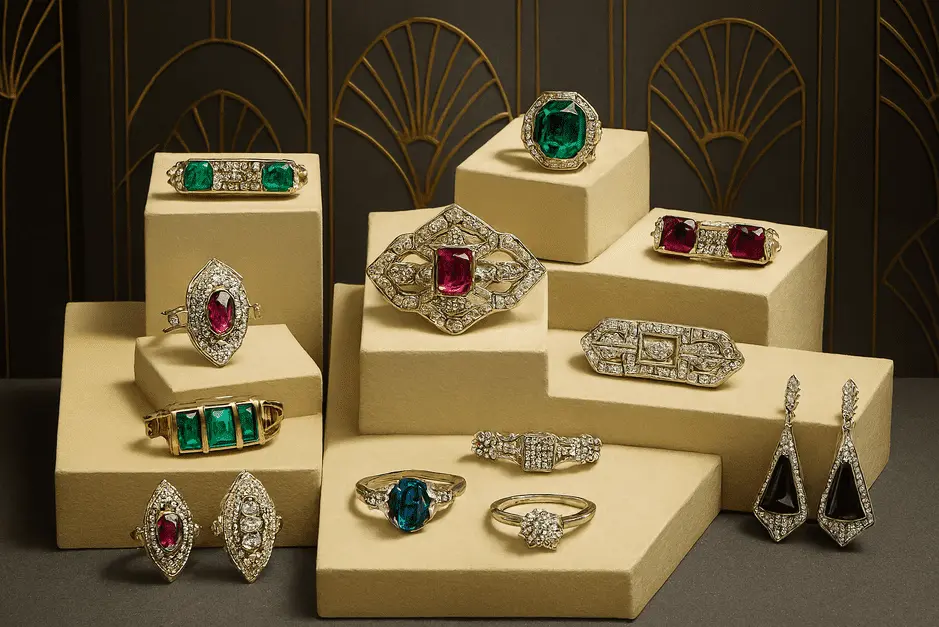
- 1930s Art Deco Jewellery in the Modern Guide to Vintage Jewellery
Geometric designs and platinum settings defined this era. Popular gemstones included emeralds, sapphires, and diamonds.
You can explore Art Deco jewellery collection to see iconic designs, while Sotheby’s auction results highlight current market values. - 1940s Retro & War Years Jewellery Guide
Gold became popular due to wartime shortages. Pieces featured larger gemstones and bold designs.
Bernstein explains how to spot authentic Retro-era jewels. See examples of verified Retro jewellery at Christie’s auction listings. - 1950s Cocktail & Suburban Life Jewellery Insights
Jewellery reflected post-war optimism. Pearls, rubies, and cultured gemstones dominated. Around 50% of pieces were designed for daily wear.
Learn identification tips from the Gemological Institute of America’s Retro jewellery guide. - 1960s Mod & Costume Jewellery in Bernstein’s Guide
Bold costume jewellery became iconic. Bernstein identifies designers whose pieces now fetch high auction prices.
Check Sotheby’s results to compare historic and current prices. - 1970s Disco & Glamour Jewellery Guide
Statement necklaces, chandelier earrings, and colored gemstones were popular. Pieces retain 40–60% of resale value if preserved. - 1980s Career Woman Jewellery – Vintage Guide
Bold gold bracelets, cocktail rings, and shoulder-enhancing designs defined the decade. Bernstein shows how to distinguish authentic designer items from mass-produced versions.
Hollywood & Designer Highlights in Modern Guide to Vintage Jewellery
The book features stars from Hollywood’s Golden Era and the jewelers who designed for them.
Collectors learn which designs remain highly sought-after today.
You can see examples of Hollywood vintage jewellery in Hollywood Vintage Jewellery Collection.
Practical Tips from the Modern Guide to Vintage Jewellery
- Ask about gemstone provenance when buying vintage. Dealers often provide verification certificates.
- Examine hallmarks to verify era and designer. GIA offers reliable reference charts.
- Compare styles across decades to spot rare pieces.
- Track auction results for price references to identify investment potential.
Case Study:
A 1940s Retro-era diamond bracelet bought for $3,200 sold for $7,500 at a 2024 auction. Understanding hallmarks and design patterns helped identify its value. See more auction examples to learn pricing trends.
FAQ – Modern Guide to Vintage Jewellery
Q: How do I identify Art Deco jewellery?
A: Look for geometric patterns, platinum or white gold, and gemstones like emeralds, sapphires, and rubies. See Art Deco guide.
Q: Which vintage era offers the best investment potential?
A: Art Deco and Retro pieces often retain 70–80% of value. Designer pieces from the 1970s–1980s are collectible but require verification via auction results.
Q: Can costume jewellery be valuable?
A: Yes. Iconic 1960s–1970s costume jewellery can be collectible if made by recognized designers.
Q: How can I start a vintage jewellery collection?
A: Begin with key eras, study hallmarks, and build relationships with reputable dealers. Use GIA references to confirm gemstone authenticity.