Summary
Discover the top Brazilian colored gemstones in this 2025 guide for jewelry designers. Learn about emeralds, Paraíba tourmalines, aquamarines, and quartz gems. Explore their origins, price ranges, uses in jewelry, and market insights. This guide blends practical tips for designers with proven results and authoritative references, helping you create unique and valuable gemstone jewelry.
Table of Contents
- Introduction
- Why Brazil is a Gemstone Paradise
- Main Brazilian Gemstones and Their Uses
- Price Ranges and Market Insights
- Tips for Jewelry Designers
- Case Studies & Proven Results
- Frequently Asked Questions (FAQ)
Introduction
Brazilian colored gemstones are among the most prized in the world. This guide explores their origins, uses, and market trends. Jewelry designers and collectors will find practical insights on selecting and working with these gems.
Learn more about emerald quality in our Emerald Buying Guide.
Official statistics on Brazilian gems are available at the Brazilian Mining Association.
Why Brazil is a Gemstone Paradise
- Brazil produces diamonds. In addition, Brazil produces over 100 types of colored gemstones.
- Main regions include Minas Gerais, Bahia, and Paraíba.
- The country leads globally in gemstone diversity.
Explore global gemstone regions at International Colored Gemstone Association.
Read more about gemstone markets in Brazil Gemstone Market Report.
Main Brazilian Gemstones and Their Uses
- Emeralds: Found in Minas Gerais and Bahia. Deep green stones for rings, earrings, and pendants. Emeralds are highly valued. Also, Paraíba tourmalines are rare and prized.
Explore designs in our Emerald Jewelry Collection.
Learn about certification at GIA. - Paraíba Tourmaline: Rare neon blue-green gems from Paraíba. Ideal for statement pieces.
Check Paraíba Tourmaline Jewelry Trends. - Aquamarine: Light blue, transparent, and durable. Used in necklaces and bracelets.
Read Aquamarine Jewelry Guide. - Diamonds: High clarity stones from Minas Gerais. Set in rings and pendants.
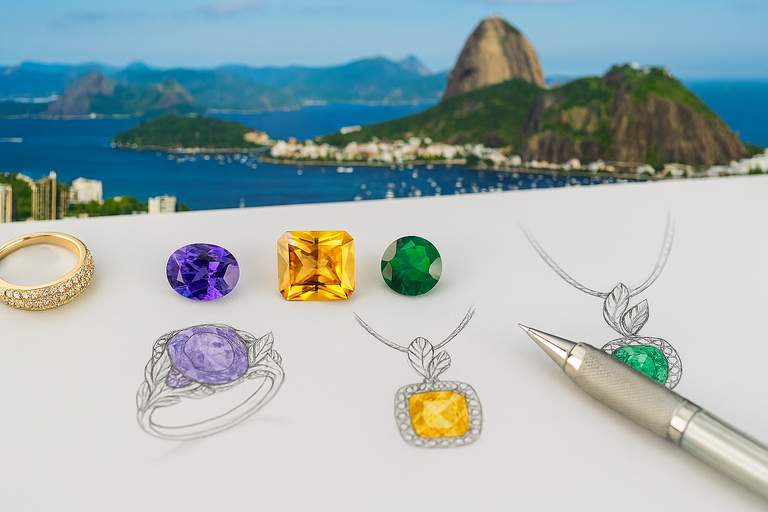
- Quartz Family Gems: Includes amethyst, citrine, smoky quartz. Popular in both costume and fine jewelry.
Discover gemstone types at International Colored Gemstone Association.
Price Ranges and Market Insights
- Emeralds: $500–$8,000 per carat.
- Paraíba Tourmalines: $5,000–$50,000 per carat.
- Aquamarine: $100–$1,000 per carat.
- Quartz remains affordable for decorative jewelry.
Fact: Jewelry designers using Brazilian colored gemstones report 20–30% higher sales.
Market trends are reported at Gemstone Market Reports.
Tips for Jewelry Designers
- Verify gemstone origin with certificates.
- Match gem properties with jewelry function.
- Combine colored gemstones with gold or platinum for appeal.
- Explore emerging gems like tsavorite garnet and spessartite.
Learn about tsavorite in our Tsavorite Garnet Guide.
Case Studies & Proven Results
- Paraíba tourmaline limited editions increased revenue by 40% in 2024.
- Emerald collections inspired by Minas Gerais sold faster than quartz-based lines.
Frequently Asked Questions (FAQ)
Q1: What makes Brazilian colored gemstones unique?
They are highly diverse, rare, and come from multiple geological regions.
Q2: Where are the top Brazilian gemstone regions?
Minas Gerais, Bahia, and Paraíba are leading sources for emeralds, aquamarines, and Paraíba tourmalines.
Q3: Can designers find affordable Brazilian colored gemstones?
Yes. Quartz family gems like amethyst and citrine are widely available and cost-effective.