Summary
The gemstone lighting guide explains why testing gemstones under multiple lights is crucial. Learn to spot color change, windowing, and flaws before purchase.
Introduction
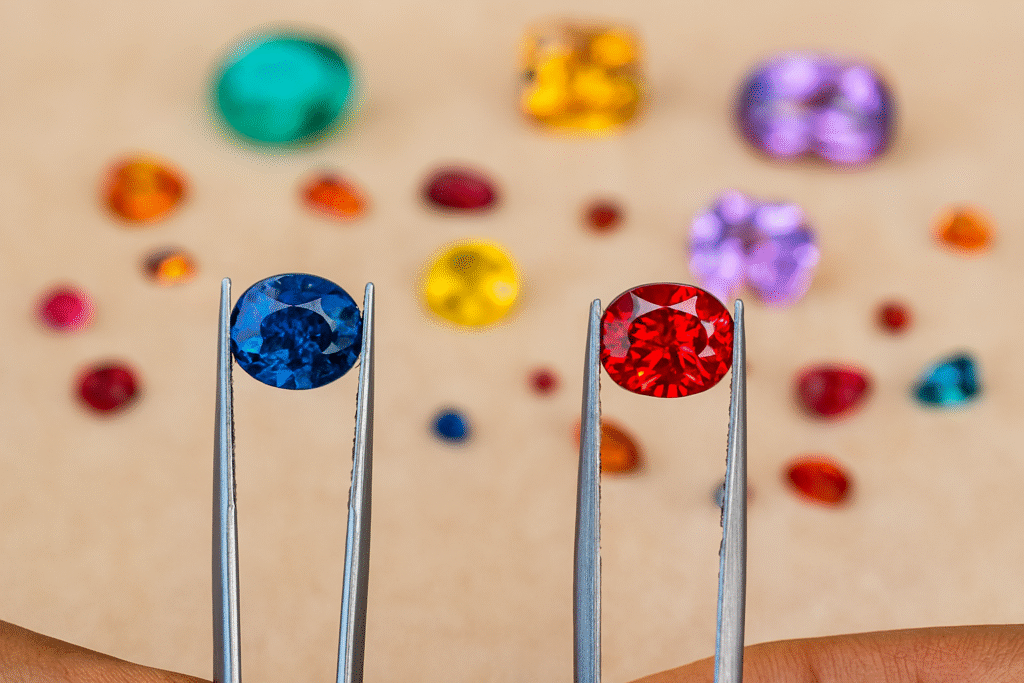
When buying gemstones, you need a gemstone lighting guide to see the true colors before you buy. Store lights can make gems sparkle indoors, but outdoors they may appear dull or different. Therefore, understanding how lighting affects gemstones helps you make confident purchases.
Why Light Matters for Gemstones
Different light sources reveal different features:
- Showroom spotlights: Enhance sparkle but may hide flaws (learn more).
- Daylight: Shows the gem’s true body color and transparency.
- Warm indoor light: Can shift tones, making stones appear yellow or brown.
Thus, checking gems under multiple lights is essential.
Color Change Gemstones
Some gemstones, like alexandrite, change color under different lighting. They may look green in daylight and red under incandescent lights. Consequently, a gemstone lighting guide ensures you see all effects before purchase.
Windowing in Gemstones
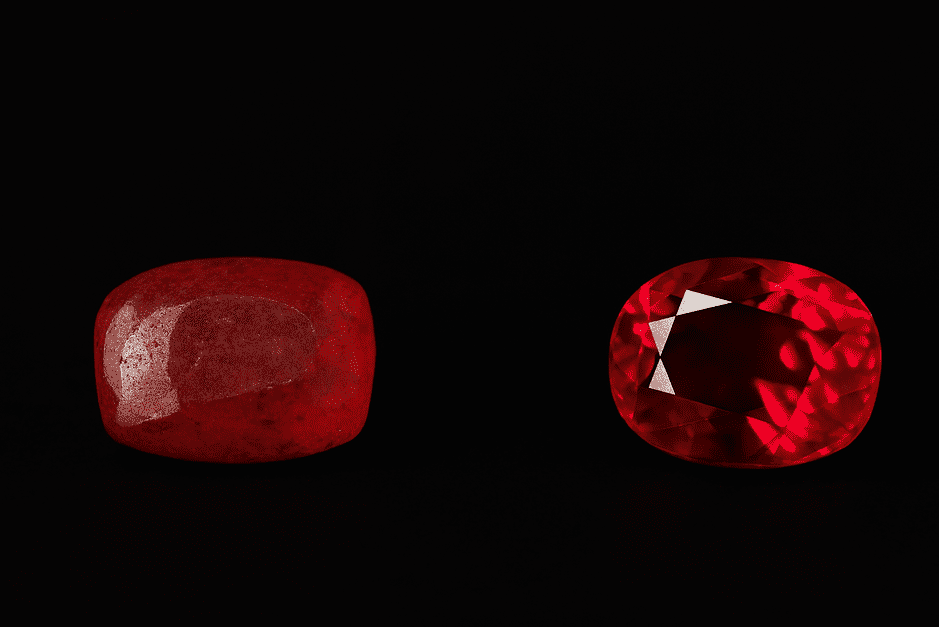
Windowing occurs when a gem is cut too shallow, letting light pass straight through. While it may sparkle under spotlights, it looks lifeless outdoors. Therefore, tilt the gem and inspect for transparent areas to detect windowing (gemstone cutting guide).
Practical Tips from a Gemstone Lighting Guide
- View gems near a window or outdoors.
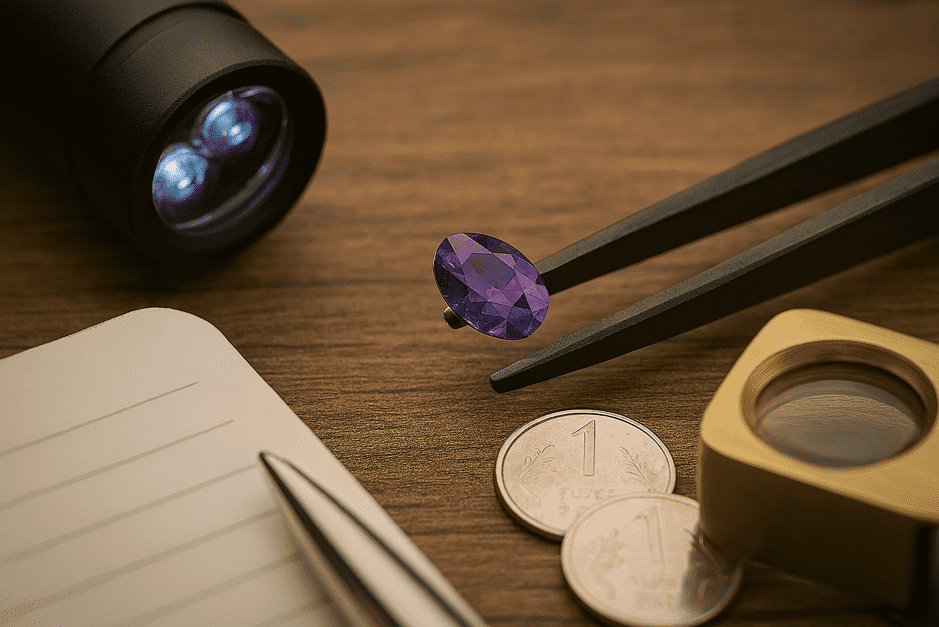
- Use a small LED flashlight to test different lighting.
- Compare warm indoor light vs daylight appearance.
- Check for light leaking through, a sign of windowing.
For example, a client bought a sapphire that looked vivid in-store but gray outdoors. He returned it the next day, because he hadn’t checked it in natural light (buying alexandrite tips).
The Takeaway: Always Use a Gemstone Lighting Guide
To see true colors before you buy, don’t rely only on showroom lighting. Inspect gems indoors, outdoors, and under different lighting. Ultimately, using a gemstone lighting guide ensures your gemstone looks beautiful wherever you wear it.
FAQ
Q1: Why do gemstones look different under different lights?
Different lights affect color perception and transparency. Showroom spotlights enhance sparkle, while daylight reveals true body color.
Q2: What is windowing in gemstones?
Windowing happens when a gem is cut too shallow, letting light pass through, creating see-through areas that reduce sparkle outdoors.
Q3: Which gemstones change color under light?
Alexandrite and some garnets are famous for color change. They appear green or bluish in daylight and red or purplish indoors.
Q4: How can I test my gemstone before buying?
Use daylight, indoor warm light, and a small flashlight to detect windowing or color shifts. Follow a gemstone lighting guide for best results.