Understanding the 4 Cs in Colored Gemstones
When it comes to colored gemstones, the 4 Cs—Color, Clarity, Cut, and Carat Weight—carry different meaning than they do for diamonds. Learning how each factor applies to colored stones will help you make smarter buying decisions.
Color is King
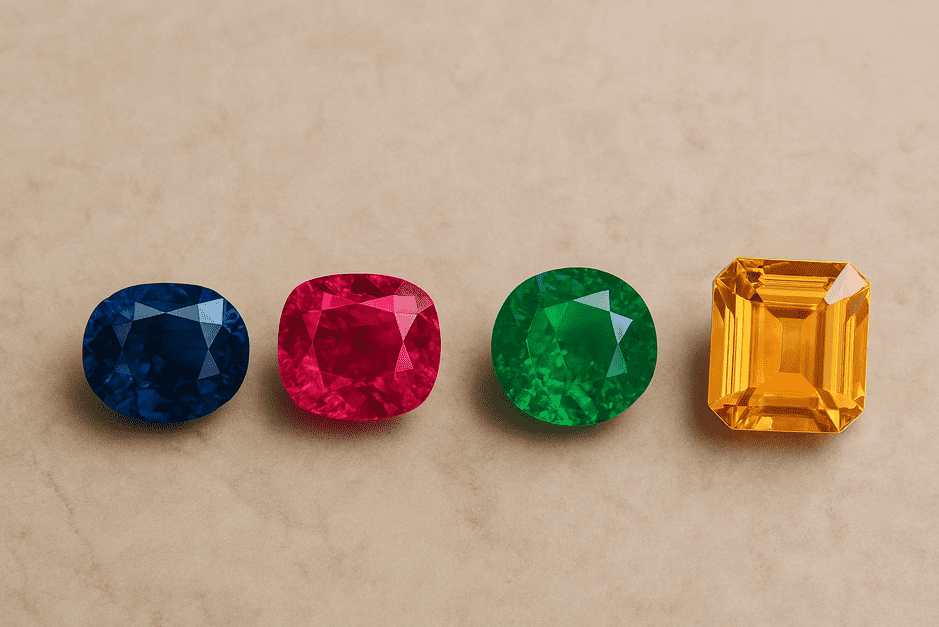
Unlike diamonds, where absence of color is prized, colored gems reward intensity. Rubies with deep pigeon-blood red and sapphires with vivid blue are far more valued than lighter stones. Think of it like painting—the richer the pigment, the more striking the artwork.
For detailed grading tips, see Ruby Grading Guide. For global standards, the GIA Colored Gemstone Education is a trusted resource.
Clarity: Imperfections Can Be Acceptable
Inclusions in diamonds can hurt value, but in colored gems, they’re often expected. Emeralds nearly always carry natural inclusions, and a flawless one may even raise suspicion.
What matters is whether inclusions distract from beauty or affect durability. A mango analogy works here: a small spot doesn’t ruin flavor. Learn more about gemstone quality from the International Colored Gemstone Association.
Cut: Focus on Color, Not Brilliance
Diamonds are cut for sparkle, but colored gems are cut to maximize color. Deep or shallow cuts may be intentional to preserve hue. A sapphire might even be slightly off-center to retain its rich core.
Think of it like tailoring: a custom cut may not be mathematically perfect but enhances overall appeal. Check out our colored gem cutting guide for examples.
Carat Weight: Size Isn’t Everything
Size doesn’t always dictate value. A 5-carat ruby is rare and highly prized, whereas a 5-carat amethyst is common. Always consider type and quality alongside weight.
Think of it like fish in a market: a large tuna is more valuable than a large sardine.
Practical Takeaways
- Judge colored stones with your eye, not a diamond checklist.
- Let color guide your choices.
- Accept inclusions if the gem remains beautiful.
- Focus on quality over bulk.
FAQ
Q1: Are the 4 Cs as important for colored gems as diamonds?
A: Yes, but color usually takes priority over clarity or carat weight.
Q2: Should I avoid inclusions in colored gemstones?
A: Not always. Many inclusions are natural and do not harm beauty or durability.
Q3: Does size determine value?
A: Only for rare stones. Type and quality matter more than carat alone.
Q4: How should I choose a cut for colored gemstones?
A: Choose cuts that maximize color rather than strict symmetry or brilliance.