Introduction
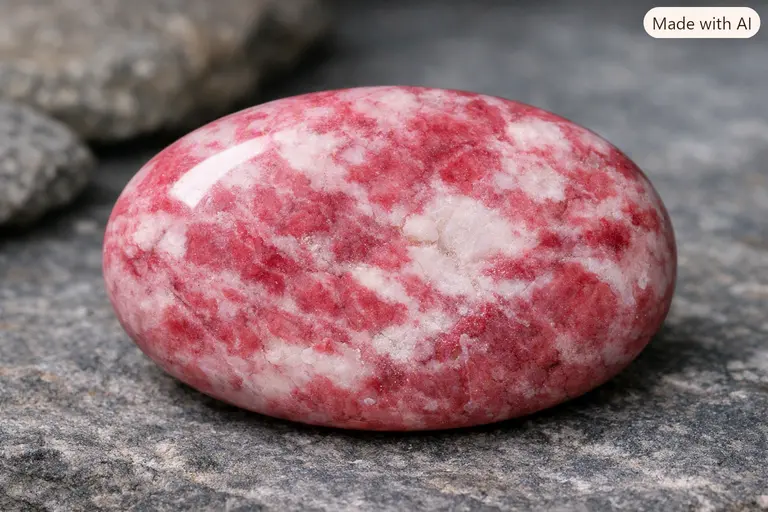
Norway gives the gem world one of its most charming pink stones: the Norwegian thulite gemstone. Specifically, manganese creates its warm pink, rose, or salmon color, setting thulite apart from ordinary minerals. Although thulite does not command the high prices of ruby, sapphire, or tanzanite, it still draws significant attention because of its vivid color, its deep geological story, and its strong Norwegian roots. In fact, many people refer to thulite as Norway’s unofficial national stone, even though the government has never given it that title officially. Additionally, the name itself connects to Thule, an ancient term for a mysterious northern land. As a result, both the stone’s appearance and its name carry a distinctly Nordic character that appeals to collectors worldwide. Consequently, understanding this unique pink zoisite requires looking past the surface to see the mineral science and history behind it.
Defining the Norwegian Thulite Gemstone Structure
To begin, the Norwegian thulite gemstone belongs to the zoisite family, and zoisite itself falls under the epidote group of minerals. Interestingly, zoisite also produces tanzanite, the world-famous blue gemstone. Consequently, thulite and tanzanite share the same mineral family despite their very different colors.
Manganese produces thulite’s pink to reddish tones. Depending on the amount of manganese present, the stone can shift from a pale salmon to a much deeper rose-red. Because thulite typically forms as a dense, fine-grained mass rather than as clear, faceted crystals, cutters rarely facet it. Instead, artisans shape the Norwegian thulite gemstone into cabochons, beads, spheres, and small carvings. This massive form makes it quite durable for ornamental use. For more details on identifying similar minerals, you can explore our guide to gemstone identification.
Why Norway is Famous for the Norwegian Thulite Gemstone
Norway holds a very special place in thulite’s history. This is because the mineral’s type locality sits near Sauland in Telemark. However, the discovery story runs deeper than a single date or person.
Discovery of the Norwegian Thulite Gemstone in Telemark
Jens Esmark first recognized the mineral in the early 1800s. Specifically, the name thulite appeared in scientific writing before mineralogists formally classified the stone. Therefore, no single year fully captures its discovery. Beyond Telemark, Norway has produced high-quality thulite from Lom, Leksvik, Lierne, and Snillfjord. Some of these sites yield strongly colored material that looks especially striking once polished.
Visual Patterns of the Norwegian Thulite Gemstone
Above all, the saturated pink and salmon shades of the Norwegian thulite gemstone give buyers a fresh alternative to more familiar pink gems. Moreover, Norwegian material often appears alongside white or gray matrix minerals, such as quartz or calcite. This contrast creates natural patterns unique to each specimen. Consequently, two pieces cut from the same rough can look remarkably different, making every jewelry piece a one-of-a-kind treasure.
Mining Localities for the Norwegian Thulite Gemstone
Undoubtedly, Norway remains the classic and most desired source. Nevertheless, miners also find thulite or related manganese-rich zoisite in Austria, Australia, Canada, China, Japan, Madagascar, New Zealand, and the United States.
Still, buyers should read locality claims carefully. For instance, some manganese-rich material from the United States actually qualifies as “clinothulite” rather than true thulite. This is because clinothulite belongs to a different crystal system entirely. Therefore, a commercial label alone cannot confirm a stone’s exact identity. For deeper reading on global localities and mineral data, Mindat’s thulite reference offers detailed records for researchers.
Physical Properties of the Norwegian Thulite Gemstone
In general, the Norwegian thulite gemstone stays opaque to translucent. It forms within the orthorhombic crystal system, even though it mostly appears as massive or granular material. Its hardness sits around 6 to 7 on the Mohs scale. Consequently, thulite works reasonably well in jewelry, although it scratches more easily than sapphire or topaz.
Its refractive index typically measures around 1.69 to 1.70, while its specific gravity ranges from roughly 3.1 to 3.4. These figures can shift depending on the chemical composition and any associated minerals like quartz. Because of this variation, a qualified gemologist should always confirm the identification whenever authenticity or value matters. Furthermore, its luster is typically vitreous to pearly on cleavage surfaces.
Common Enhancements for the Norwegian Thulite Gemstone
Sellers rarely treat the Norwegian thulite gemstone the way they routinely heat sapphire or fill emerald fractures. Even so, you should not assume every pink stone remains completely natural. Occasionally, sellers dye or impregnate porous material to boost its color or surface durability.
Therefore, buyers should simply ask sellers whether any treatment occurred. This is especially important when a stone looks unusually vivid or carries a premium price as a “rare find.” The GIA guide to gem treatments explains why this disclosure matters for consumer protection. In short, transparency is the key to a safe purchase.
Rhodonite vs the Norwegian Thulite Gemstone
What gets confused with thulite most often? To be sure, rhodonite offers the closest visual comparison because it also displays pink tones with contrasting patterns. However, rhodonite usually shows black manganese-oxide veining, while the Norwegian thulite gemstone tends to show white or gray matrix instead.
Because visual cues alone cannot guarantee 100% identification, gemologists rely on refractive index and specific gravity tests. Furthermore, sellers sometimes dye porous materials such as magnesite or howlite and market them under misleading names. Consequently, you should seek professional testing rather than attempt risky home tests that could damage the stone.
FAQ: Guide to the Norwegian Thulite Gemstone
Is thulite considered a rare gemstone?
Yes, in its highest quality. While zoisite is found in many places, the specific manganese-rich variety known as the Norwegian thulite gemstone is relatively scarce compared to common quartz.
Can I wear thulite in an engagement ring?
You can, but you must be careful. Since its hardness is 6 to 7, it is softer than diamond. Therefore, a protective bezel setting is recommended to prevent scratches during daily wear.
How do I clean my thulite jewelry?
The best way to clean it is with warm, soapy water and a soft brush. In addition, you should avoid ultrasonic cleaners or harsh chemicals, as they can damage the stone or its polish.
Is all thulite from Norway?
No. While Norway is the primary source, thulite is also mined in countries like Australia, Namibia, and the USA. However, collectors often prefer the Norwegian material for its historical significance.
Why is my thulite turning white in some spots?
This is usually not the thulite itself changing, but rather the presence of white quartz or calcite matrix. These inclusions are natural and often add to the beauty of the piece.
Conclusion
Ultimately, the Norwegian thulite gemstone offers a unique blend of Nordic heritage and natural beauty. It remains a favorite for those who appreciate “story” stones that carry a sense of place. Whether you are a collector in Jaipur or a jewelry enthusiast in Oslo, this pink zoisite provides an earthy elegance that faceted gems often lack. By choosing genuine material and verifying its origin, you can enjoy a piece of Norway’s geological legacy for years to come.
Disclaimer
This article serves general educational purposes only and does not replace a professional gemological appraisal. Readers should consult a qualified gemologist whenever authenticity, treatment, or value genuinely matters. The author has no financial affiliation with the labs or brands mentioned.