Introduction to Karuppur Kalamkari Art
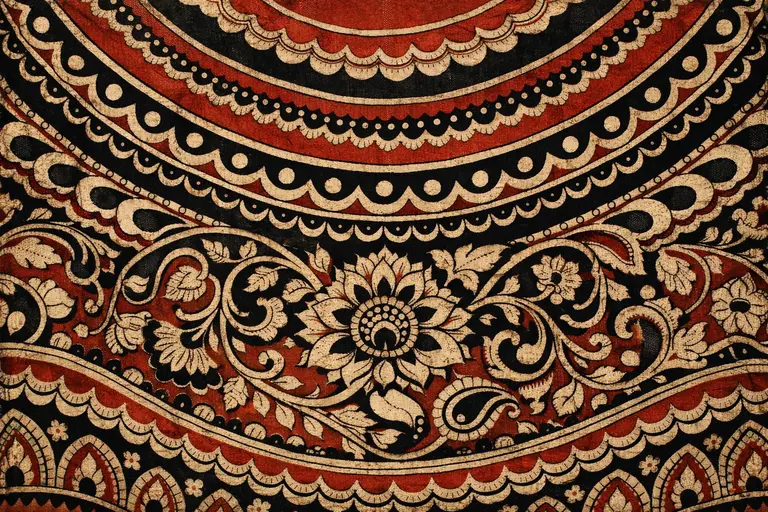
Karuppur Kalamkari art holds a truly special place among India’s vast textile traditions; however, remarkably few people outside of specialized circles know its name. Once you examine an authentic piece of this cloth closely, you immediately notice something surprising. Specifically, the flowing motifs and delicate line work echo the concentric bands of agate and the intricate grain lines found inside petrified wood.
This visual resemblance is certainly not a coincidence. Instead, it reflects centuries of patient observation by master craftsmen in Tamil Nadu. These artisans studied flowers, vines, and flowing water with remarkable care. Consequently, they created patterns that still echo natural geological formations today. This unique aesthetic makes Karuppur Kalamkari art an excellent companion for agate and petrified wood jewellery. By understanding this connection between art and geology, we can appreciate the depth of India’s creative history. To see how other natural elements inspire jewelry, you can read our guide on Wayanad Robusta and coffee gemstones.
Thanjavur Roots of Karuppur Kalamkari Art
The story of this craft began in the Thanjavur region during the early seventeenth century. Initially, the Nayaka rulers provided the primary support for these artisans. Later, the Maratha kings continued that generous patronage, ensuring that the paintings became a recurring motif on ceremonial and regal attire.
Unlike mass-produced printed fabrics, artisans hand-paint every authentic piece using specialized pens called Kalams. They fashion these tools from bamboo and coconut tree trunks. Furthermore, the process involves applying natural mordants before washing and drying the fabric repeatedly in local river water. As a result, a single piece can take anywhere from a few weeks to several months to complete. Historically, these textiles served temple ceremonies above all else. They appeared as ornate umbrella covers, chariot covers, and cylindrical hangings called thombai. Therefore, the craft became a symbol of sacred devotion as much as artistic skill. If you enjoy South India’s weaving traditions, you may also like our article on Kanchipuram Silk Sarees.
How Karuppur Kalamkari Art Mirrors Nature
At first glance, the resemblance between the textile and the stone feels striking. Three shared qualities explain why Karuppur Kalamkari art feels so geological in nature.
Motifs in Karuppur Kalamkari Art
First, both the art and the stone display flowing, concentric patterns. Agate forms through repeated mineral deposits inside volcanic cavities over millions of years. Similarly, Karuppur artists paint curved borders, paisleys, and thazhampoo (screw pine) motifs that move in rhythmic waves across the cloth.
Organic Style of Karuppur Kalamkari Art
Second, both traditions celebrate organic growth over rigid, forced geometry. While machine prints repeat perfectly, authentic hand-painted work carries subtle variations from the artist’s hand. Likewise, agate and petrified wood carry beautiful irregularities formed over long geological periods. Consequently, both the fabric and the stone feel “alive” rather than manufactured. This focus on natural character is similar to why Indian designers choose raw diamond and Polki jewelry.
Natural Dyes in Karuppur Kalamkari Art
Traditionally, Karuppur artisans work with a very restrained palette consisting of black, red, and yellow. They derive these shades from natural mordants and vegetable sources. For instance, they create black from iron filings and jaggery, while they extract red from madder root.
Interestingly, agate and petrified wood draw their colours from similar sources, such as iron oxides and manganese. These minerals produce the same deep reds and warm ochres found in the textiles. Even though the palette of Karuppur Kalamkari art is narrower than modern synthetic fabrics, its core tones align perfectly with the earthy bands of the mineral world. This shared chemistry creates a visual harmony that is hard to replicate with artificial dyes. For official details on geographic preservation, visit the Geographical Indication Registry of India.
Modern Revival of Karuppur Kalamkari Art
Many people wonder why such a beautiful craft remains relatively unknown in the 21st century. The answer involves several practical challenges that the community currently faces.
First, authentic production moves incredibly slowly. Because every piece demands meticulous hand-painting, it simply cannot compete with factory-made textiles on speed or price. Second, cheap screen-printed imitations frequently flood the market. Although these look like Kalamkari from a distance, they lack the genuine soul and dye penetration of the original. Third, because the craft was historically tied to temple commissions, artisans rarely made goods for the general retail market.
Fortunately, government recognition now supports a major revival. Karuppur Kalamkari art received its Geographical Indication (GI) status in 2021. This application was led by the Tamil Nadu Handicrafts Development Corporation, known as Poompuhar. As a result, this tag now helps protect the craft’s identity and supports the remaining genuine artisans. This level of protection is essential for building India’s global brands.
Sourcing Authentic Karuppur Kalamkari Art
Finding a genuine piece requires significant care because printed imitations are everywhere. You should always start your search with reputable bodies like Poompuhar. Additionally, Chennai-based craft councils occasionally host exhibitions of genuine hand-painted textiles.
Whenever you inspect a piece, you should examine both sides of the fabric. Authentic vegetable dyes penetrate the cloth fully, meaning the design is almost as vivid on the back as it is on the front. In contrast, machine prints leave the reverse side noticeably lighter. This simple check helps you spot genuine Karuppur Kalamkari art quickly. By supporting these artisans, you contribute to a that has survived for four hundred years.
FAQ About Karuppur Kalamkari Art
Is Karuppur Kalamkari the same as Srikalahasti style?
No, while both use the Kalam (pen), Karuppur Kalamkari is unique to Tamil Nadu and was historically used on gold-brocaded fabrics for royalty. The motifs and color depths differ significantly from the Andhra styles.
Can I wash Karuppur Kalamkari art fabrics?
Yes, but you must be careful. You should hand-wash them in cold water with mild, natural detergents to preserve the vegetable dyes. Avoid drying them in direct, harsh sunlight.
What is the significance of the “Kalam”?
The Kalam is a bamboo stick with a bundle of fine hair or felt. It allows the artist to control the flow of the dye, creating the signature fine lines that define Karuppur Kalamkari art.
Why does it have a faint smoky smell?
Authentic pieces often carry a slight scent of milk and natural extracts used in the tanning and dyeing process. This is actually a reliable sign of authenticity.
Is the GI tag important for buyers?
Absolutely. The GI tag guarantees that the product was made using traditional methods in the specific geographic region of Karuppur, protecting you from cheap industrial fakes.
Disclaimer
This article serves educational purposes only. Historical timelines and comparisons draw from artisan interviews and traditional knowledge. The author has no financial affiliation with the government bodies or craft organizations mentioned. Always verify the authenticity of handcrafted textiles before making a purchase. Readers should consult with textile experts for professional appraisal.