Introduction to Mangosteen Color Gemstones
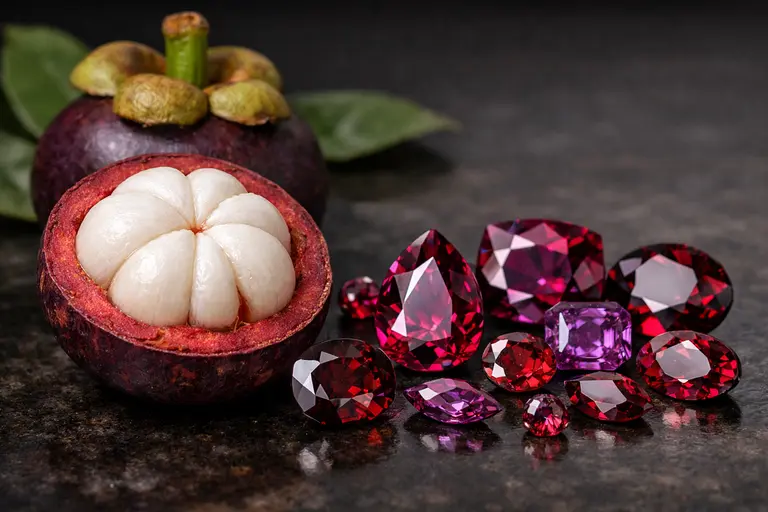
Have you ever held a ripe mangosteen and admired its deep, rich purple-red skin? That striking hue is not just a beautiful feature of the tropical fruit; it also appears in some of the world’s most sought-after precious minerals. In 2026, gem traders and jewelry designers actively use the term Mangosteen Color Gemstones to describe specific garnets, spinels, and sapphires. This description has become a recognized standard in both the fruit market and the international gem trade. Consequently, more collectors now search for stones that carry these deep plum, burgundy, and magenta tones. Whether you love tropical horticulture or fine jewelry, understanding this color connection will help you make smarter purchases. You should also read our guide on gemstone buying mistakes to understand how quality standards and color saturation affect a stone’s long-term value.
Where Does the Mangosteen Fruit Grow?
The mangosteen fruit originally comes from the Malay Peninsula and Borneo. Over time, farmers spread their cultivation across Indonesia, Sri Lanka, and southern India. Because mangosteen trees require heavy rainfall and a humid tropical climate, only a few specific regions in India can grow them successfully.
One of those exceptional regions is Kerala. Specifically, Pariyaram near Chalakudy in the Thrissur district is widely recognized as India’s “Mangosteen Village.” One of the country’s largest mangosteen farms sits right there. This orchard belongs to the Merlin Moothedan family, whose six-acre property holds more than 1,000 trees. Some of these older trees likely originated from Malaysian planting stock. For more on tropical fruit cultivation in India, you can visit the Indian Council of Agricultural Research. Understanding the lush environment of the fruit helps buyers appreciate the organic, earthy richness of Mangosteen Color Gemstones.
Identifying Gemstones that Match Mangosteen Hues
The outer rind of a ripe mangosteen displays a deep reddish-purple tone with rich burgundy undertones. Interestingly, several natural gemstones fall right within this exact color range. Here are the primary varieties that collectors should investigate.
Rhodolite Garnet: The Classic Match
Rhodolite garnet sits at the top of the list for visual similarity. This gem blends raspberry-red and violet-purple tones in a way that perfectly mirrors the mangosteen’s skin. Moreover, Sri Lanka and India both produce fine rhodolite specimens. Better yet, most rhodolite garnets reach the market completely untreated, meaning the color you see is entirely natural.
Malawi Magenta Garnet
Around 2023, miners discovered vivid magenta-purple garnets in Malawi. Since then, dealers have gradually introduced these stones to international buyers. The color of these stones strongly resembles a fresh mangosteen rind under natural sunlight. However, you should note that “Malawi Magenta” is a trade nickname rather than a formal mineral species name.
Purple Spinel and Sapphire
High-quality purple spinels from Vietnam, Myanmar, and Tanzania display rich plum and grape tones. Furthermore, these stones have become increasingly popular because they combine brilliant color with exceptional durability. Purple sapphires can also show deep mangosteen-like shades. However, you must be cautious because sellers routinely heat-treat sapphires to improve their color. Therefore, you should always ask for a laboratory certificate before finalizing your purchase. To see how these stones are graded, refer to the Gemological Institute of America.
Expert Methods for Identifying Gemstones
Gemologists use several reliable scientific tools to test and identify these stones. Understanding these methods helps you shop with much greater confidence. You may also read our article on Understanding BIS Hallmark to see how certification protects jewelry buyers across all material types.
First, the magnet test is very effective for garnets. Many garnets contain iron and manganese, so they react to a strong neodymium magnet. Consequently, this simple test quickly separates a natural garnet from a glass imitation. Second, experts look for pleochroism in sapphires. Purple sapphires show different color flashes—purple, violet, or reddish—when a gemologist rotates them under polarized light.
Furthermore, spinels and garnets show “single refraction” under a polariscope. This means they stay dark when rotated, unlike the “blinking” effect seen in sapphires. Finally, microscopic examination of inclusion patterns remains the gold standard. Natural gemstones contain tiny internal features like fingerprint patterns or small crystals. Glass fakes, in contrast, often show round air bubbles or curved swirl lines. Therefore, you should always insist on a professional viewing before committing your funds.
Are Mangosteen Color Gemstones Treated?
Treatment status directly affects a gemstone’s resale value. Most garnets and spinels in the mangosteen color range reach buyers in their completely natural state. As a result, their rich color is a pure gift of nature. Purple sapphires, however, almost always undergo high-temperature heat treatment. Because of this key difference, professional laboratory reports are essential for any high-priced sapphire purchase. You can find more information on gem testing at the Gemmological Institute of India.
Smart Buying Tips for Fruit and Gems
Whether you are shopping for tropical fruit or rare jewels, specific habits protect you from disappointment. When buying mangosteen fruit, you should choose pieces with fresh green caps and slightly soft shells. In contrast, a very hard shell often signals that the fruit inside is dry or spoiled.
Similarly, when purchasing Mangosteen Color Gemstones, you must always request a certificate from a trusted lab like GIA or IGI. Additionally, stay cautious if a flawless purple-red stone sells at an unusually low price. Natural stones typically contain subtle inclusions or slight color zoning. Finally, you should examine any purple-red stone under different light sources, such as daylight and LED, because the color can shift noticeably. By following these steps, you ensure that your collection remains both beautiful and authentic.
FAQ: Mangosteen Color Gemstones
Where is India’s most famous mangosteen farm located?
The most famous farm is in Pariyaram, near Chalakudy in Kerala. It is run by the Moothedan family and serves as a major hub for tropical fruit lovers.
Which stone is the best alternative to a purple sapphire?
Purple spinel is an excellent alternative. It offers similar Mangosteen-like colors and great durability but is usually untreated and more affordable.
Does mangosteen color fade in gemstones?
No. In natural garnets, spinels, and sapphires, the purple-red color is chemically stable and will not fade over time, even with daily wear.
How do I check for HUID in jewelry?
In India, you can use the BIS Care app to scan the HUID code on your jewelry. This verifies the purity and the jeweler’s registration instantly.
Are Malawi garnets more valuable than rhodolite?
Currently, yes. Because they are a more recent discovery with a very specific magenta-pink hue, they often command a premium among collectors.
Disclaimer
This article is for educational and informational purposes only. Gemstone identification requires professional laboratory testing. Always consult a qualified gemologist and a recognized certification laboratory before making any high-value purchase. The author has no financial affiliation with the mangosteen farms or gemstone dealers mentioned.