Introduction to the One Saree 28 States Concept
India holds one of the richest and most diverse textile traditions in the world. Specifically, every individual state tells its own weaving story through unique colors, threads, and ancestral techniques. Now, imagine pulling all 28 of those distinct stories into a single, cohesive six-yard drape. That is the fundamental idea behind the One Saree 28 States project—a wearable map of India that brings together the most iconic handloom styles from every corner of the country. Consequently, this article breaks down how such a masterpiece would look and which famous saree style belongs to each of the 28 Indian states. You should also read our guide on gemstone buying mistakes to understand how quality standards apply to the jewelry that complements these exquisite fabrics.
Engineering the One Saree 28 States Design
First, picture a calm and neutral base for the body of the garment—perhaps an off-white, beige, or soft gold silk. Designers intentionally keep the body simple so that the intricate borders can do all the talking. Then, along the edges and across the pallu, 28 distinct border segments each represent one Indian state. Each segment carries that specific state’s signature weave, such as the bold temple borders from Tamil Nadu or the shimmering brocade from Uttar Pradesh.
Finally, the pallu brings everything together as the dramatic showstopper. A designer could layer different regional motifs in a single rich panel, transforming the full spread into a visual journey across the subcontinent. Because weavers often create borders and bodies separately and join them later using the “H-join” technique, this idea is more than just an artistic fantasy. In fact, it is technically possible, though highly complex. Therefore, such a piece usually functions as a one-of-a-kind art object or an exhibition centerpiece. For more technical details on weaving standards, you can visit the Handloom Export Promotion Council.
Regional Borders in the One Saree 28 States
As we travel around the edges of the One Saree 28 States drape, we see a stunning variety of textures. Each region provides a unique contribution to the overall aesthetic harmony.
Northern and Western Saree Textures
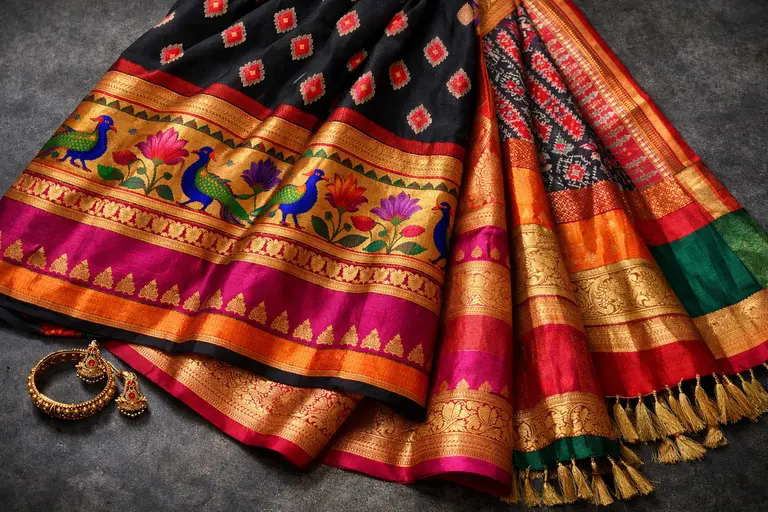
Starting at the top, the northern stretch opens with the heavy gold zari of a Banarasi border from Uttar Pradesh. Next, it flows into the bright, folk-style floral bursts of Phulkari embroidery from Punjab. The design then shifts into the playful waves of Leheriya from Rajasthan. Moving along the western edge, Gujarat brings the geometric precision of Patola—a double-ikat silk that looks identical on both sides. After that, Maharashtra’s Paithani border introduces vibrant peacocks and lotus blooms. Finally, Madhya Pradesh adds a light, shimmery strip of Chanderi with fine gold threadwork.
Southern and Eastern Handloom Heritage
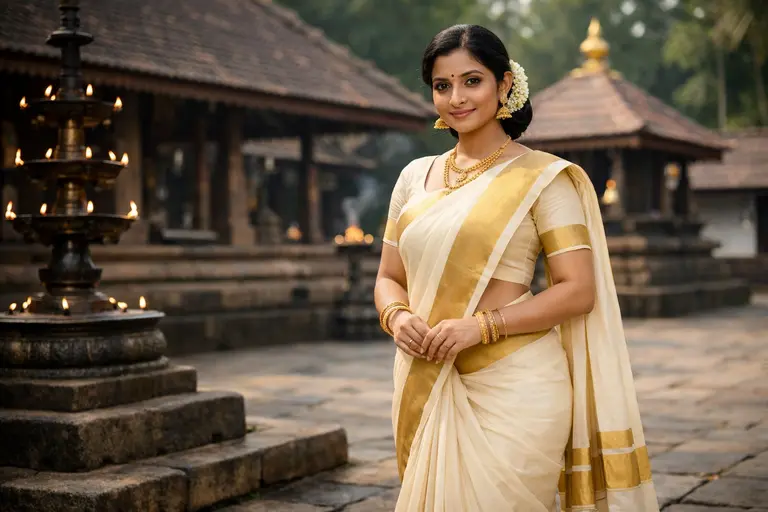
Traveling further south, the saree enters its most opulent territory. Tamil Nadu’s Kanjeevaram brings heavy mulberry silk and bold temple patterns. Karnataka’s Mysore silk adds a smooth, gold-edged band with a minimalist flair. Kerala’s Kasavu frames the section with crisp off-white cotton and a striking golden border. On the eastern stretch, the saree takes on a more earthy, tribal character. To begin with, Assam’s Muga silk glows in its natural golden tones. In addition, Odisha’s Sambalpuri ikat weaves in conch shells and fish symbols. Furthermore, Manipur adds its triangular Moirang Phee temple border to create a sharp, architectural finish. To understand the mineral dyes often used in these processes, check Vesti la natura.
Iconic Styles for the One Saree 28 States
To help you navigate this massive heritage, we have matched one iconic textile style to each of the 28 Indian states. While most states possess several famous weaves, this list highlights the primary one that would appear in a One Saree 28 States design.
North and Central India Weaves
- Andhra Pradesh – Uppada Silk: Lightweight with fine zari, often featuring floral Jamdani motifs.
- Arunachal Pradesh – Apatani Cotton: Features minimalist backstrap-loom tribal stripes.
- Assam – Muga Silk: The rare, naturally golden silk that is exclusive to the Brahmaputra valley.
- Bihar – Bhagalpuri Tussar: Known for its earthy, textured feel and natural resilience.
- Chhattisgarh – Kosa Silk: A matte, wild silk that artisans often dye with natural forest extracts.
- Goa – Kunbi Saree: Distinguished by large red-and-white checks and a simple, rugged border.
- Gujarat – Patola: The legendary double-ikat silk from Patan where both sides look identical.
- Haryana – Resham Dhuria: Hand-embroidered cotton that reflects rural festive artistry.
- Himachal Pradesh – Chamba Rumal-inspired: Features Pahadi miniature-style floral embroidery.
South and West India Traditions
- Jharkhand – Tribal Tussar: Handwoven silk depicting scenes from daily tribal village life.
- Karnataka – Mysore Silk: Pure mulberry silk famous for its smooth fall and 22k gold zari.
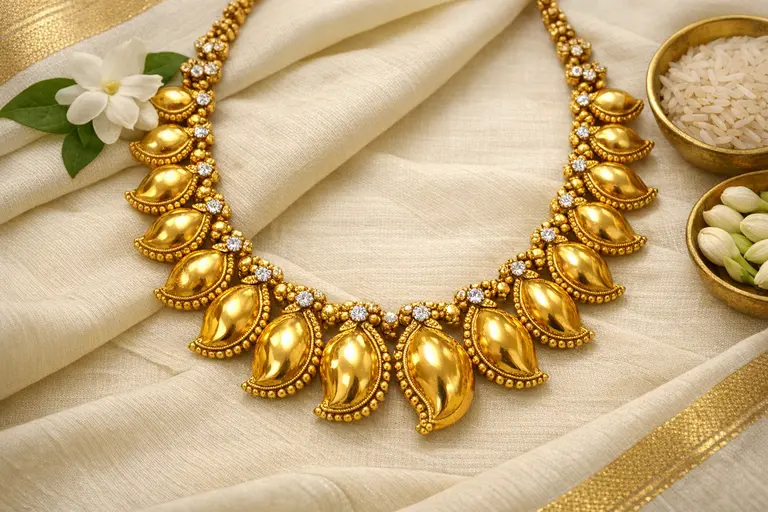
- Kerala – Kasavu: The iconic white cotton of the “Land of Gold,” essential for Onam festivities.
- Madhya Pradesh – Chanderi: A sheer, airy blend of silk and cotton with delicate “butti” motifs.
- Maharashtra – Paithani: Rich silk featuring intricate hand-woven peacocks on a solid silk base.
- Manipur – Moirang Phee: Instantly recognizable by its sharp, triangular temple-peak borders.
- Meghalaya – Jainsem-inspired: Traditionally made from Eri silk, adapted here for the saree format.
- Mizoram – Puan-inspired: Features bold horizontal patterns in striking red, black, and white.
- Nagaland – Ao Naga-inspired: Linear, symbolic motifs adapted from ancestral tribal shawls.
East and Northeast India Crafts
- Odisha – Sambalpuri: A complex ikat weave featuring conch shells, fish, and the “chakra” wheel.
- Punjab – Phulkari: Meaning “flower work,” this style uses vibrant silk threads on cotton bases.
- Rajasthan – Bandhani: A meticulous tie-dye technique resulting in vivid dotted clusters.
- Sikkim – Bhutia-inspired: Features Buddhist spiritual symbols and dragon patterns in heavy brocade.
- Tamil Nadu – Kanjeevaram: The “Queen of Indian Silks,” known for its weight and temple art.
- Telangana – Pochampally Ikat: Sharp geometric patterns created by dyeing yarn before weaving.
- Tripura – Risa-inspired: Tribal borders and patterns translated onto fine cotton drapes.
- Uttar Pradesh – Banarasi: The pinnacle of Mughal-inspired opulent silk brocade from Varanasi.
- Uttarakhand – Panchachuli Weave: Earthy tones handwoven by high-altitude women’s cooperatives.
- West Bengal – Baluchari: Famous for its pallus that depict scenes from the Ramayana and Mahabharata.
You can explore these certifications further at the Bureau of Indian Standards (BIS), which manages quality marks for various traditional goods.
FAQ: One Saree 28 States
Can I actually purchase a 28-state saree?
Not easily in a standard retail shop. Most One Saree 28 States pieces are created for exhibitions or as designer art pieces due to the immense labor involved in joining 28 different weaves.
Is such a saree too heavy to wear?
Yes, it is generally heavier than a standard saree. Because it combines different fabric densities and heavy zari borders, it is better suited for stage events or formal photoshoots than daily wear.
Do all these states really make sarees?
Not all states have a “saree” tradition in the classic six-yard sense. For example, in the Northeast, women traditionally wear wraps and shawls. However, modern designers translate these specific tribal textiles into saree formats for the One Saree 28 States concept.
How should I care for a multi-weave saree?
You must dry-clean it only. Since different fabrics (like cotton and silk) shrink at different rates, washing it at home could ruin the alignment of the various segments.
Are these weaves protected by law?
Yes, most of the styles mentioned, such as Kanjeevaram and Banarasi, carry Geographical Indication (GI) tags. This protection ensures that only artisans from those specific regions can use the traditional names.
Disclaimer
This article aims to inspire and educate readers about the One Saree 28 States concept. The state-to-weave pairings represent editorial choices based on popular handloom records as of 2026. Always verify authenticity with certified weavers before making a purchase. The author has no commercial affiliation with the craft councils mentioned.