Introduction to the Pezzottaite Gemstone
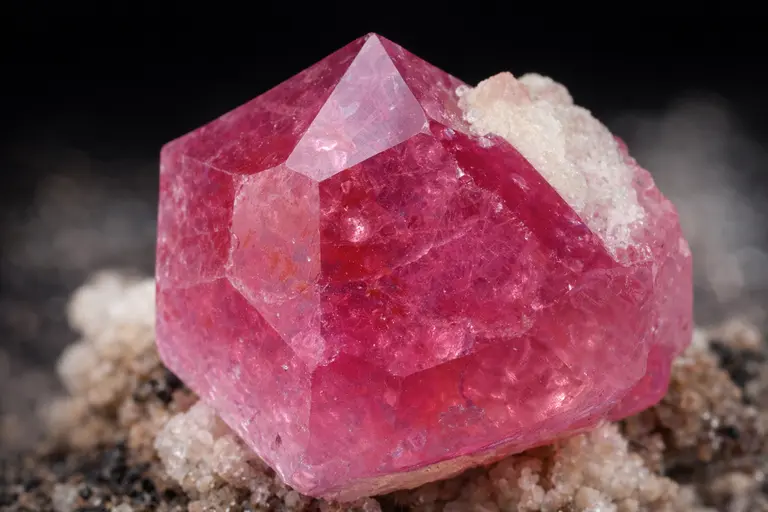
Have you ever seen a gemstone so vivid that it stops you in your tracks? The Pezzottaite Gemstone does exactly that. This rare raspberry-red to purplish-pink gem captivates collectors and jewelry lovers around the world. Although it belongs to the beryl mineral family—the same family as emerald and aquamarine—scientists classify pezzottaite as a completely separate mineral species. Specifically, it contains unusually high levels of cesium and lithium, which give it a unique chemistry and a heavier feel. Miners first discovered it in Madagascar in 2002, and it remains one of the scarcest colored stones on the market today. You should also read our guide on gemstone buying mistakes to understand how quality standards apply to such rare mineral acquisitions.
Geographical Origins of the Pezzottaite Gemstone
Miners first found the Pezzottaite Gemstone in 2002 at the Sakavalana pegmatite near Ambatovita, a remote area of Madagascar. The crystals they pulled from the ground displayed striking raspberry and purplish-pink tones that immediately caught the attention of the global gem trade. At the height of production, around 60 miners worked the narrow tunnels using hand tools and minimal safety equipment. As a result, they faced serious risks every day, including rockfalls and poor air quality underground.
Over time, the Sakavalana deposit gradually depleted, and fresh stones entering the market became increasingly scarce. However, small pockets of pezzottaite later turned up in Afghanistan and Myanmar. More recently, a new deposit in Madagascar’s Sahatany Valley began producing richly saturated stones again, according to gemological reports from 2025. Therefore, a limited new supply has reached elite collectors, though the gem remains extremely rare overall. For historical data on these regions, visit the official Mindat portal.
Scientific Identification of the Pezzottaite Gemstone
Because this stone shares a similar pink-to-red color with several other gems, people often confuse it with red beryl, morganite, or pink tourmaline. Fortunately, gemologists use specific measurements and tests to tell these stones apart. Consequently, proper identification is the only way to protect your investment.
Crystal Structure of the Pezzottaite Gemstone
First, the Pezzottaite Gemstone forms in a trigonal crystal system, whereas true beryl is hexagonal. This difference in atomic structure alone confirms its status as its own mineral species. Second, its refractive index falls between 1.601 and 1.620. These numbers sit slightly above typical morganite values, so a gemologist can separate them easily using a refractometer. Additionally, the stone has a specific gravity of roughly 3.05 to 3.14. This makes it noticeably denser than most similar-looking gems. To understand the science behind these tests, you can refer to the Gemological Institute of America.
Common Treatments for the Pezzottaite Gemstone
Like many colored gemstones, the Pezzottaite Gemstone sometimes undergoes clarity treatments. Specifically, sellers may use oil or resin filling to reduce the visibility of small surface-reaching fractures. These treatments are generally accepted in the trade as long as the seller discloses them clearly. Therefore, you should always ask for full disclosure before finalizing a purchase.
The pink-to-purple color in this gem comes primarily from manganese combined with radiation-induced color centers. Because of this, the color can fade when the stone experiences extremely high temperatures. In the marketplace, pink tourmaline serves as the most common imitation. However, tourmaline shows higher birefringence and a different absorption spectrum. For everyday buyers, the safest approach involves requesting a lab report that confirms the stone’s identity. You can also explore our article on Understanding BIS Hallmark to see how certification standards work in India’s jewelry market.
Styling the Pezzottaite Gemstone in Jewelry
Because the Pezzottaite Gemstone is both rare and somewhat brittle, most stones end up in collector pieces rather than mass-market mall jewelry. Gem cutters typically facet clean or lightly included crystals into oval or pear shapes to maximize their brilliance. More heavily included material usually becomes cabochons, which often highlight a beautiful cat’s-eye (chatoyant) effect.
Designers generally choose protective settings, such as bezels or halos, to shield the stone from sharp blows. For example, a bezel-set pendant or a pair of drop earrings works beautifully for occasional wear. On the other hand, an exposed solitaire ring carries more risk during daily activities because the stone can chip if struck hard. As a result, you should save this gem for special occasions or handle it with extreme care.
Buying the Pezzottaite Gemstone in 2026
Mining in Madagascar often takes place in small-scale, informal operations. Therefore, whenever possible, you should choose dealers who practice responsible sourcing and maintain transparent supply chains. From a practical buying perspective, inclusions are normal in this species, so you must weigh clarity against price.
Based on current 2026 market reports, commercial-quality material can start at a few hundred dollars per carat. In contrast, fine-quality pieces regularly reach several thousand dollars per carat. Exceptional stones above two carats can climb to nearly 10,000 USD per carat. Because of these high prices, always request a grading report from a respected institution like the GIA. This report provides independent confirmation and protects you from paying premium prices for common simulants.
FAQ: Common Questions on the Pezzottaite Gemstone
Is Pezzottaite the same as Red Beryl?
No. While they share a family, they are different species. Pezzottaite contains cesium and lithium, which red beryl lacks. Furthermore, their crystal structures are trigonal and hexagonal, respectively.
Why is it called Pezzottaite?
The gem takes its name from Dr. Federico Pezzotta, a mineralogist who performed extensive research on the pegmatites of Madagascar where the stone was discovered.
Is it durable enough for an engagement ring?
It has a hardness of 8, which is good, but it is brittle and often included. Consequently, if you wear it in a ring, you must use a protective setting like a bezel to prevent chipping.
Where is the best place to buy it?
You should look for specialized rare gemstone dealers or high-end mineral shows. Always ensure the stone comes with a certificate from a recognized gemological laboratory.
Does the color fade over time?
Prolonged exposure to intense heat can cause the color centers to shift, potentially fading the stone. Therefore, you should store your jewelry in a cool, dark place when not in use.
Disclaimer
This article is for general educational purposes only and reflects gemological references and trade reports available as of 2026. Gem prices, availability, and industry practices change over time. Always consult a qualified gemologist or trusted jeweler before making any buying decisions or relying on any single source of information.