Introduction
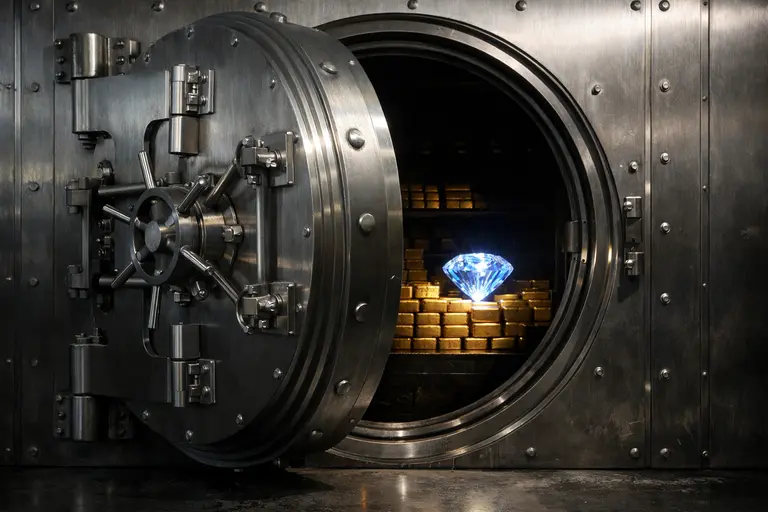
Somewhere between the runways of Changi Airport and the gleaming skyline of the city, there is a windowless building that most people will never enter. Inside it, a 66-million-year-old dinosaur fossil sits alongside gold bars, priceless paintings, and Antique Diamonds worth more than most people’s lifetime earnings. Officially, this place is called Le Freeport Singapore.
Understanding how it works tells you a lot about how wealth operates in the modern world. As an expert in luxury assets, I often track how gems move around the globe. While dealers trade gems in markets like Surat vs 47th Street, collectors bury them in places like this. In this article, I will explore the origins of this fortress, what is actually inside, and why the ultra-wealthy use it to avoid taxes legally.
What Exactly Is Le Freeport Singapore?
Before we look inside, it helps to understand what a “Freeport” actually is—because the name is a little misleading. A freeport is not a port in the nautical sense. Instead, it is a bonded storage zone, a piece of land that sits legally outside a country’s customs territory.
Consequently, goods that enter a freeport are not considered to have formally entered the country. As a result, they are not subject to import duties or sales taxes for as long as they remain inside. Think of it like a holding area. You bring your painting in, it sits in a climate-controlled room, and the tax clock simply does not start ticking. Crucially, if you sell the painting to another collector while it is still inside the vault, the transaction happens tax-free. Therefore, for high-value assets like art, gold, and Kashmiri Saffron and Padparadscha sapphires, it has become a way to hold and trade enormous wealth in a financial limbo.
How the Vault Was Built: The Bouvier Era
Historically, the man behind Le Freeport Singapore is a Swiss businessman named Yves Bouvier. Bouvier built his fortune not as an art dealer, but as an art shipper. Nevertheless, he understood better than almost anyone how the ultra-wealthy moved their collections.
After launching successful freeports in Geneva and Luxembourg, he set his sights on Asia. Unquestionably, Singapore was an obvious choice. It is politically stable, has a trusted legal system, and sits at the center of the fastest-growing wealth market on the planet (including Indian UHNWIs). In May 2010, the facility opened its doors next to Changi Airport.
However, ownership has since changed. The original build was approximately S$100 million. In 2022, Chinese businessman Jihan Wu — best known for co-founding Bitmain Technologies, the world’s largest Bitcoin mining company — purchased it for around S$40 million through his holding company Bitdeer Technologies. Bouvier sold at a steep loss amid legal battles, though the facility itself remains highly operational.
What Is Actually Inside Le Freeport Singapore?
Physically, it is a 30,000-square-meter building with no windows. That architectural choice is deliberate—windows are a security vulnerability. Inside, the owners divide the facility into private vaults, climate-controlled storage rooms, and by-appointment exhibition spaces.
The Treasures Inside Le Freeport Singapore
In fact, the range of assets stored there is extraordinary.
- Fine Art: Paintings by Picasso and Van Gogh.
- Precious Metals: Tonnes of Gold Bullion.
- Gemstones: Rare, untreated colored stones. As a gemologist, I know that gems are the ultimate freeport asset—they pack millions of dollars into a space the size of a matchbox and require zero climate maintenance.
- Oddities: Rare wines, vintage cars, and even a Triceratops fossil nicknamed “Trey” (valued at US$5 million).
Understandably, the clientele is deliberately anonymous, but it is safe to assume that some of the most valuable privately-owned objects in Asia are sitting quietly behind those walls.
Security and Logistics: The Armored Route
Getting into Le Freeport Singapore is not like entering an ordinary storage unit. First, visitors pass through bulletproof glass vestibules and submit to full-body scans. Moreover, the facility uses biometric authentication (fingerprints, facial recognition) rather than simple ID cards.
Once inside, the climate control is serious. The climate system maintains rooms at 21°C with 55% humidity to preserve oil paintings. Guards handle transport logistics with the same care. Valuables move directly from Changi Airport’s runways to the facility via internal airport roads, bypassing public roads and customs halls entirely. Thus, a collector flying in from Dubai can have their artwork delivered to a private vault without it ever being exposed to the public. Compare this to the high-security logistics of the Angadia System.
The Tax Question: Is it Legal?
This is where the story gets interesting for the rest of us. The freeport model is entirely legal. Singapore’s government deliberately set up the facility to position the city-state as a global hub for luxury goods. The tax exemption is a feature, not a loophole.
However, the system has attracted scrutiny. Because ownership of goods can change hands inside a freeport without public records, regulators have flagged them as potential vehicles for money laundering. A wealthy individual can, in theory, buy and sell assets repeatedly inside, accumulating gains that are never reported. Singapore has taken steps to address this. The facility must comply with strict Anti-Money Laundering (AML) laws. Nevertheless, verifying the true owner of a centuries-old gem remains difficult.
Conclusion: The Architecture of Wealth
Why should this matter to someone who will never own a dinosaur fossil? Because Le Freeport Singapore represents how the global financial system is truly structured. While the average person stores wealth in traceable bank accounts and property, the ultra-wealthy store it in physical assets hidden in legally ambiguous spaces. Ultimately, this facility proves that the most valuable things in the world are the things we cannot see.
FAQ: Le Freeport Singapore
What is Le Freeport Singapore in simple terms?
It is a maximum-security, bonded storage facility located next to Changi Airport. Goods stored there are legally outside of Singapore’s customs territory, meaning they are exempt from import duties and taxes.
Is it legal to avoid taxes this way?
Yes, entirely. The facility operates within Singapore’s legal framework. Fundamentally, the tax-free status of stored goods is a deliberate feature of Singapore’s trade policy to attract global wealth.
Who owns Le Freeport today?
Jihan Wu, the billionaire co-founder of Bitmain Technologies (a major cryptocurrency mining company), purchased the facility in July 2022 through his holding company, Bitdeer Technologies.
What kind of gems are stored there?
Usually, “Investment Grade” stones. These are highly certified (GIA/Gübelin), untreated natural diamonds, rubies, and sapphires. Read my guide on Colored Stone Grading to understand what makes them valuable.
Why are freeports controversial?
Because transactions inside freeports are not publicly recorded. Ownership of assets can change hands without triggering tax events, leading international regulators to worry about money laundering and hidden wealth.
Disclaimer
This article is for informational and educational purposes only. It does not constitute legal, financial, or tax advice. The information presented reflects publicly available sources at the time of writing and may not account for subsequent regulatory changes. Readers should consult a qualified professional before making any financial or legal decisions.