Author’s Note
You don’t need to know anything about the diamond industry to understand the De Beers Sightholder System. If you’ve ever bought a diamond or wondered why they cost so much, this one’s for you. I will walk you through what’s changing, why it matters, and what it means for the everyday person.
Introduction
Something big is happening in the diamond world right now, and most people outside the trade have no idea. De Beers—the company that has controlled the global diamond trade for well over a century—is quietly cutting ties with more than 20 of its closest business partners. By July 1, 2026, it plans to work with only about 45 handpicked buyers worldwide, down from 69.
At first glance, that might sound like an internal business reshuffle. However, the De Beers Sightholder System dictates the global flow of diamonds. This cut has real consequences for the diamonds you see in store windows and the future of the natural diamond industry itself. As a Gemologist who watches these markets closely, I see a massive shift of power toward India. In this article, let’s break down these changes simply and clearly.
What Is the De Beers Sightholder System?
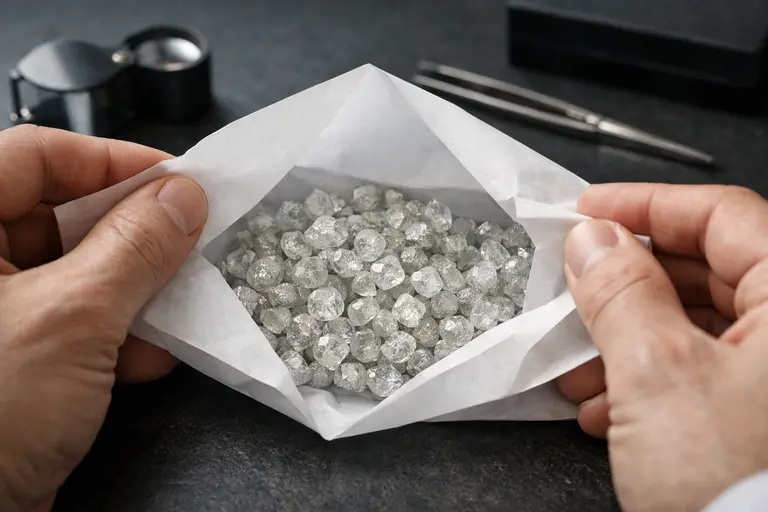
To begin with, think of De Beers as the world’s biggest diamond wholesaler. Instead of selling rough diamonds to just anyone, De Beers only sells to a very exclusive group of approved buyers known as “Sightholders.” These are massive companies—cutters, polishers, and large dealers—who get invited to special sales events, called “Sights,” about ten times a year.
At each sight, they do not negotiate. De Beers hands them a box (an allocation) of uncut diamonds at a set price. They must buy it. Why does this matter to you? Because these sightholders are the first link in the chain between a diamond mine and your local jeweler. Whoever buys from De Beers shapes what eventually ends up in the display cases around the world. For more on how rough diamonds move, the World Diamond Council tracks industry governance.
The History of the De Beers Sightholder System
Historically, the De Beers Sightholder System is not a new concept. De Beers created it in the late 1800s to maintain tight control over the number of diamonds entering the market and their prices. By keeping the list of approved buyers exclusive, De Beers could prevent prices from crashing—a strategy that worked remarkably well for the 20th century.
In the 1970s, the list was enormous, with over 350 companies worldwide. Back then, critics referred to it as a closed “gentlemen’s club.” Over the following decades, De Beers steadily consolidated its operations. Today, sightholders must meet strict financial requirements and follow sustainability guidelines (the Building Forever program). You can read more about this evolution in my guide to the Rolex Business Model, which uses similar scarcity tactics.
Why is the De Beers Sightholder System shrinking?
Currently, three major forces are impacting the natural diamond industry simultaneously. Together, they are forcing De Beers to make tough decisions.
- Lab-Grown Diamonds are everywhere. Synthetic diamonds cost a fraction of the price. Consequently, more shoppers (especially in the US) are opting for them, drawing buyers away from natural diamonds. Read my thoughts on this in Natural Diamonds Over Lab-Grown.
- Production is dropping. At its peak, De Beers produced around 33 million carats per year. By 2025, the number had fallen to 21.7 million carats. Fewer diamonds to sell means fewer buyers are needed.
- The industry is struggling. The post-pandemic boom has ended. Furthermore, a slowdown in Chinese luxury spending has suppressed rough diamond prices.
Faced with this, De Beers decided it was better to have fewer, stronger partners. Crucially, to keep their spot in the De Beers Sightholder System, companies now need to buy at least $15 million worth of diamonds per year. This threshold pushed many smaller players out.
India’s Rise in the De Beers Sightholder System
Undoubtedly, the biggest winners in this reshuffle are companies with a connection to the Indian market. India has become the most important destination for natural diamonds. Not only are Indian consumers buying more fine jewelry, but cities like Surat are responsible for cutting and polishing 90% of the world’s diamonds. In fact, De Beers added new sightholders from India as part of this shift—a clear signal of where the company sees its future. I discussed this dominance in my article Surat vs 47th Street Diamond Trading.
Conversely, the biggest losers are dealers in New York and Israel. Once the beating heart of the global trade, today, only a small handful of sightholders remain active in each location.
Conclusion on the De Beers Sightholder System
Ultimately, if you are planning to buy a diamond, this shift in the De Beers Sightholder System matters. Fewer middlemen in the supply chain could, in theory, mean a more streamlined path from mine to store. However, a more concentrated network of buyers also means less competition at the top, which rarely results in lower retail prices. What is encouraging is that De Beers is investing heavily in traceability, ensuring you know your diamond was sourced ethically.
FAQ: De Beers Sightholder System
What is the De Beers Sightholder System in simple terms?
It is an exclusive club of approved diamond buyers. These companies get the privilege to purchase rough, uncut diamonds directly from De Beers several times a year at fixed prices.
How many are in the De Beers Sightholder System in 2026?
De Beers is cutting its list down to approximately 45 approved buyers, starting July 1, 2026. This is a steep drop from 69 in the previous cycle.
Why is the De Beers Sightholder System dropping buyers?
Primarily, a combination of lab-grown diamond competition, falling mine production, and a difficult global market has forced De Beers to focus on fewer, financially stronger partners.
What is the minimum spend to stay on the list?
De Beers now requires sightholders to purchase at least $15 million worth of rough diamonds per year to keep their approved status.
Why is India suddenly so important to De Beers?
India is the world’s largest diamond cutting and polishing center (Surat). Moreover, its domestic consumer market for fine jewelry is growing rapidly, offsetting the slowdown in China.
Disclaimer
This article is based on publicly available industry reporting, trade publications, and De Beers Group communications as of March 2026. Sightholder counts, contract terms, and purchasing thresholds are subject to change as De Beers formally updates its directory when new contracts take effect in July 2026. This article does not constitute financial, investment, or legal advice. Readers are encouraged to consult primary sources and industry professionals before making decisions based on this information.
This article draws on reporting from JCK Online, De Beers Group publications, and verified industry analysis.