Introduction
In the rolling, mist-covered hills of Northeast India, ornamentation tells a story that goes far beyond decoration. It is rooted in a rich tribal heritage. Mizoram Jewellery carries deep cultural meaning, marking social rank, tribal identity, and ceremonial life. Unlike the heavy gold of Temple Jewelry South India, the Mizo people historically found their wealth in rare beads, fossils, and natural elements.
Whether you are a collector, a traveler, or a gemology enthusiast, understanding this tradition helps you appreciate its legacy. As a Gem Expert, I am particularly fascinated by their use of opalized wood, which bridges the gap between botany and mineralogy. In this guide, we will explore the origins, key pieces, how to identify authentic items, and what to watch out for when you shop for Mizoram Jewellery in 2026.
Traditions and Origins of Mizoram Jewellery
To begin with, this craft occupies a central place in Mizo culture. Artisans and families pass down the pieces through generations as heirlooms, much like a Kerala family passes down a Kasumala. Traditionally, communities wear these ornaments during important festivals, most notably Chapchar Kut (the spring festival). At such events, jewelry does not merely add beauty—it broadcasts the wearer’s status and wealth.
The Three Pillars of Mizo Adornment
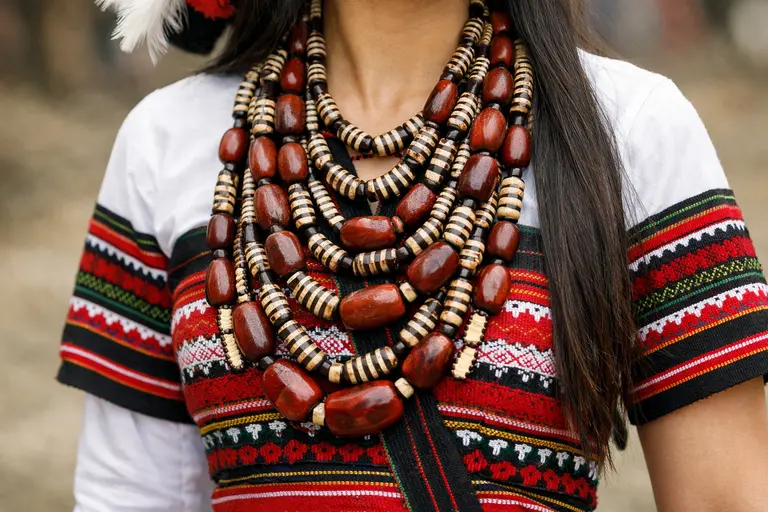
Three pieces stand out as the cornerstones of the tradition. First, the Thi Hmu is a striking necklace. It is made of reddish-brown beads, often Carnelian or Agate. Communities recognize it as a symbol of elegance. It shares a trade history with the Agates of Cambay. Second, and most importantly, is the Pumtek bead. This holds the greatest cultural and monetary value. Third, artisans produce elaborate headgear. They use brass, colored cane, porcupine quills, and the iridescent wings of green beetles. Consequently, these pieces are worn alongside the Puanchei, the colorful traditional wraparound skirt.
The Science of Pumtek in Mizoram Jewellery
As a Gemologist, I must highlight the Pumtek bead because it is an absolute marvel. Craftspeople create genuine antique Pumtek from fossilized, opalized palm wood.
What does this mean? Millions of years ago, silica-rich ash buried palm trees. Over time, Opal and Chalcedony replaced the organic wood. Therefore, it is a gemstone that looks like wood. Furthermore, artisans carefully etch linear patterns (stripes or zigzags) onto the surface using natural dyes, then bake them into the stone. These barrel-shaped beads remain unpolished and carry minute surface holes. If you find this interesting, read my deep dive on Best Petrified Wood.
How to Identify Authentic Mizoram Jewellery
Spotting genuine pieces requires attention to materials and craftsmanship. Fortunately, once you know what to look for, authentic Mizoram Jewellery reveals itself clearly.
- The Material Feel: Genuine ornaments use natural components—real fossil wood, brass, silver, and bone. Because they are natural, they carry a specific weight and feel cold to the touch. In contrast, synthetic plastic alternatives feel light and warm.
- The Pumtek Pattern: Authentic Pumtek beads display an unpolished texture and tiny surface holes (pores of the ancient palm wood). Moreover, the etched linear patterns follow traditional motifs. They are irregular, hand-drawn lines rather than the mechanical uniformity of a machine.
- The Imperfections: Handcrafted jewelry almost always shows minor imperfections—slight asymmetry or subtle color variation. Rather than being flaws, these confirm human craftsmanship.
You can apply these same observation skills when identifying Naga Bead Jewellery.
Imitations and Modern Variations
As authentic materials become scarcer and more expensive, the market has filled with modern alternatives. Manufacturers commonly substitute genuine opalized wood and rare beads with painted glass, resin, or plastic. While these substitutes dramatically reduce the cost, making the jewelry accessible for tourists, they strip away the cultural authenticity.
Moreover, machine production has replaced hand-carving in many commercial lines. It is also worth noting that certain traditional materials (like ivory or hornbill beaks) now fall under strict wildlife protection laws. As a result, modern artisans must adapt their materials to stay legal. Consequently, not every modern piece that differs from the antique template is a “fake”—context matters.
Consumer Tips: Buying Mizoram Jewellery Safely
Whether you shop in Aizawl’s bustling markets or at a handicraft fair in Delhi, follow these steps:
- Verify the Materials: Always ask the seller what the beads are made of. If they claim it is Pumtek, ask if it is fossilized wood or glass. A genuine artisan will welcome the question.
- Buy Direct: Whenever possible, purchase from local craftspeople or Mizoram Government-recognized outlets (like ZOHANDCO). This ensures your money supports the tribes. Organizations promoting fair trade crafts are worth exploring. These include Craftmark India or the Tribal Cooperative Marketing Development Federation (TRIFED).
- Avoid “Too Cheap”: Authentic antique Pumtek beads can cost hundreds of dollars each. Therefore, if a full necklace costs ₹500, it is plastic or glass.
For more tips on safe buying, read my guide on Gemstone Buying Mistakes.
Conclusion: A Living Fossil
In summary, Mizoram Jewellery represents a living tradition that continues to evolve. By wearing a Pumtek bead, you are wearing a piece of natural history—a tree turned to stone, carved by a tribal artisan. Ultimately, understanding what makes each piece unique allows you to make informed choices that honor this remarkable craft heritage.
FAQ: Mizoram Jewellery
What makes Pumtek beads so valuable?
Their value comes from their rare origin as fossilized, opalized palm wood. This is combined with the skilled, permanent hand-etching of the stripes. Authentic antique specimens are exceedingly rare, functioning as heirloom wealth in Mizo culture.
How do I tell a real Thi Hmu necklace from a fake?
Genuine Thi Hmu uses natural reddish-brown stone (Agate/Carnelian). Therefore, they feel heavy, cold, and show subtle color variations. Plastic imitations feel light, warm, and possess an artificially uniform, bright color.
Where is the best place to buy authentic Mizoram jewellery?
The best options are state government handicraft emporiums in Aizawl, or authorized stalls at cultural festivals like Chapchar Kut. Avoid generic street vendors if you are seeking high-value antiques.
Is it legal to buy jewellery made from animal products?
India’s Wildlife Protection Act strictly prohibits the trade of ivory, rhino horn, and hornbill beaks. While antique pieces occupy a legal grey area, modern buyers should avoid them and seek legally compliant, sustainable alternatives.
Can modern Mizoram jewellery still carry cultural value?
Absolutely. Many contemporary Mizo designers honor their heritage while using modern, legal materials (like glass or brass). As long as the piece reflects genuine cultural knowledge and design tradition, it carries real value.