Introduction
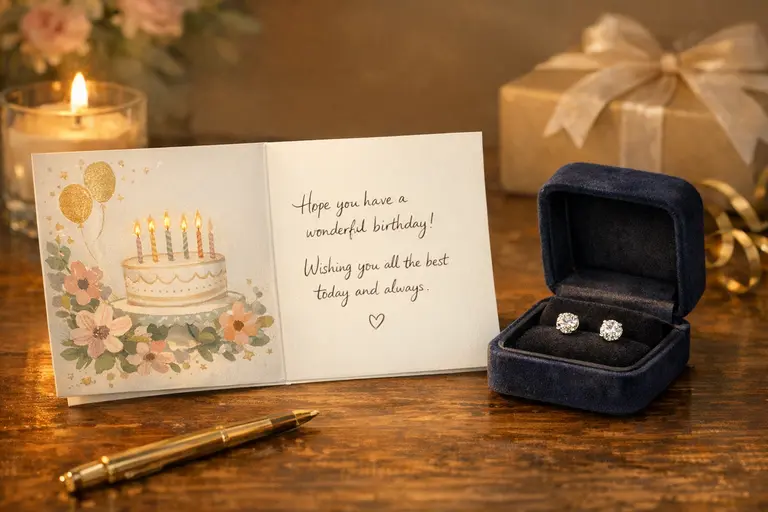
Most jewelers send birthday greetings to loyal customers. But here is the real question: do those customers actually care? For Indian Jewelry Customers, a Birthday Card can be a powerful tool or a piece of trash. The answer depends entirely on how you send it. A generic, mass-printed card delivered days late does very little for brand loyalty. However, a thoughtful, personalized gesture sent at the right moment can improve customer retention by as much as 16%.
In the Indian market, where gold buying is emotional, this matters deeply. As an expert in jewelry retail strategy, I believe that automation has killed the soul of customer service. In this article, I will explain why you should go back to basics. I will cover the psychology of the Indian buyer, the “Nakshatra” nuance, and why a physical card beats a WhatsApp message every time.
Why use an Indian Jewelry Customers Birthday Card?
To begin with, jewelry in India is rarely just a product. Most purchases connect directly to a life event—a wedding, an anniversary, or a gift between loved ones. Because of this deep emotional context, customers already associate their jeweler with meaningful moments. As a result, a birthday greeting from a trusted jeweler does not feel like an advertisement. Instead, it feels like a continuation of a relationship.
Furthermore, birthdays function as relationship milestones. When a jeweler acknowledges a customer’s birthday—especially with a physical card—the gesture signals genuine care rather than routine marketing. This distinction matters enormously. Clients notice whether a brand treats them as a transaction or as a person. Additionally, physical greetings carry a perception of premium treatment. Unlike digital coupons, which are deleted instantly, a tangible card sits on a desk. It occupies physical space in their home.
Personalizing the Indian Jewelry Customers Birthday Card
Not all birthday cards produce the same result. The key differentiator is Personalization. Indian Jewelry Customers respond most strongly when a card includes their name and a reference to their taste.
Conversely, discount-only birthday messages can damage a brand. When jewelers train customers to expect a coupon on every occasion, they inadvertently lower the perceived value of their brand. Therefore, lead with a gesture, not a discount.
Three elements that work:
- Name Inclusion: “Dear Mrs. Lakshmi,” not “Dear Customer.”
- Handwritten Notes: Even one sentence written by the staff member who served them makes a huge difference.
- Relevant References: “Hope you are enjoying the Emerald necklace you bought last Diwali.”
The “Nakshatra” Birthday: A Cultural Edge
As an expert, here is a tip that will set you apart from every corporate chain. In South India (Kerala, Tamil Nadu), many families celebrate their Star Birthday (Janma Nakshatra) according to the Malayalam or Tamil calendar, not just the English date.
Imagine the impact if you collected this data. Sending a card on their Nakshatra shows deep cultural respect. It tells the customer: “I understand your traditions.” This strategy is particularly effective for older, high-net-worth clients who value tradition over trends. Read more about cultural nuances in my Jewelry Retail Etiquette in Kerala guide.
Brands using Indian Jewelry Customers Birthday Card
Major brands like Tanishq, BlueStone, and P.C. Chandra already recognize this value. They actively promote collections as ideal birthday gifts. Similarly, newer retailers like Dazelane have built greeting cards directly into their product offering.
However, independent jewelers have an advantage: Agility. You don’t need a corporate policy to write a note. You just need a pen. Beyond individual retailers, the broader industry is adopting a multi-channel approach. Yet physical cards consistently outperform digital alternatives. Direct mail open rates reach approximately 95%, far exceeding email. Thus, for jewelers seeking genuine attention, the postman is your best friend.
Preferences for an Indian Jewelry Customers Birthday Card
Understanding preferences allows jewelers to move from guesswork to strategy. Research points to three priorities.
1. Meaningful Packaging
Naturally, customers view packaging as an extension of the brand. A greeting that arrives in a textured envelope communicates quality. This aligns with the luxury experience I discuss in the Cartier Business Model.
2. Small Physical Gifts
Research shows that small gifts generate better recall than vouchers. For example, a small box of chocolates or a single rose delivered to their home creates a multi-sensory memory.
3. Perfect Timing
Timing determines whether a greeting feels thoughtful or careless. Ideally, it should arrive 2-3 days before the birthday. A card that arrives a week late signals poor attention to detail.
Strategy for Indian Jewelry Customers Birthday Card
For jewelers who want to convert Indian Jewelry Customers Birthday Card efforts into sales, you need a system.
- Collect Data: Train staff to ask for birthdates (and Nakshatras!) at the point of sale.
- Segment: Specifically, high-value clients get a hand-delivered gift. New clients get a handwritten card.
- No Discounts First: Offer value through experience. Reserve discounts for a follow-up.
- Family Data: Collect birthdays of spouses and children. A reminder to a husband that his wife’s birthday is coming up is the most valuable service you can offer him!
Conclusion on Indian Jewelry Customers Birthday Card
In summary, the answer is Yes. Indian Jewelry Customers want a Birthday Card, provided it is authentic. Ultimately, the brands that succeed are not the ones that send the most cards. They are the ones who send the right card to the right person, at exactly the right moment. Make them feel seen, and they will make you their family jeweler.
FAQ: Indian Jewelry Customers Birthday Card
Do birthday cards actually improve retention?
Yes. Research shows personalized greetings can boost retention by 16%. In the jewelry trade, where lifetime value is high, keeping one customer is worth thousands of rupees.
Should I send a discount coupon?
Not inside the card. It cheapens the gesture. Send the card as a pure greeting. Send an offer (“Birthday Month Special”) separately via email or WhatsApp a few days later.
Is a physical card better than WhatsApp?
Absolutely. A WhatsApp message is free and easy to ignore. A physical card costs money and effort. The customer knows this and values it more.
When should I send it?
Aim for arrival 2-3 days before. This puts your brand top-of-mind just before they might be planning a purchase or a party.
Do Indian customers value this more?
Yes. Indian culture is relationship-based (Sambandham). We buy from people we like. A birthday gesture strengthens that personal bond.