Introduction
For any serious collector, the comparison of Ratnapura vs Chanthaburi Gem Buying represents the two poles of the colored stone trade. These two cities hold a mythical status in the industry.
Ratnapura, known as the “City of Gems,” specializes in raw, untreated sapphires straight from the mud of local mines. In contrast, Chanthaburi serves as the world’s “kitchen” for heated, treated, and precisely cut colored gems like rubies and sapphires. Therefore, beginners often face pitfalls without proper knowledge. As a Gemologist who has traded in both, I can tell you: What works in Sri Lanka will fail in Thailand. In this guide, I will break down the key differences, common mistakes, and essential dos and don’ts for Ratnapura vs Chanthaburi Gem Buying.
Atmosphere of Ratnapura vs Chanthaburi Gem Buying
First, let’s set the scene. The vibe in these two towns is polar opposite.
Ratnapura: The Early Morning Hustle
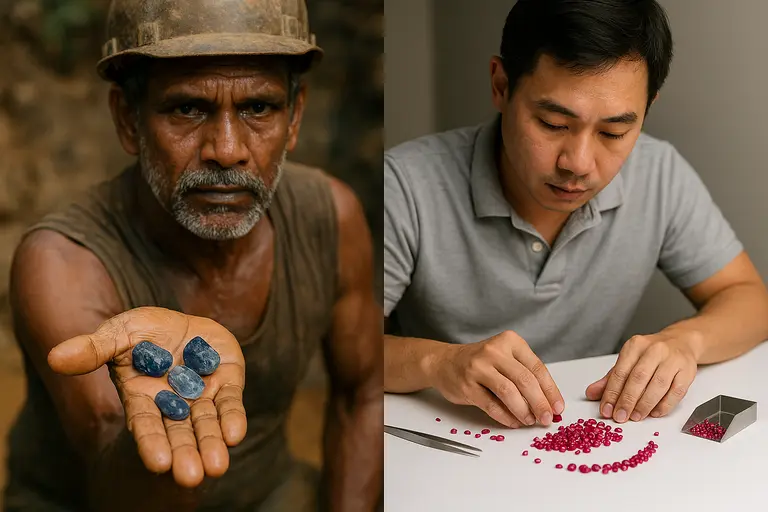
Ratnapura’s markets, like the famous Amba Gaha Yata (Under the Mango Tree), feel traditional and chaotic. Here, local miners and street brokers gather daily, starting as early as 6:00 AM. Crucially, most business happens standing up on the street. Brokers will approach you aggressively, pulling rough stones from their pockets wrapped in paper. It is a high-energy, physical negotiation.
Chanthaburi: The Weekend Sit-Down
In contrast, the Chanthaburi Weekend Gem Market operates primarily on Fridays and Saturdays. It is a “Table Market.” Buyers sit at rented desks, and brokers (runners) come to them to show goods. Consequently, it feels more organized. You sit with your calculator and loupe while a stream of sellers presents trays of cut stones. It buzzes with international brokers, creating a fast‑paced wholesale environment.
Gem Types in Ratnapura vs Chanthaburi Gem Buying
Next, you must understand what you are buying. This is the most critical part of Ratnapura vs Chanthaburi Gem Buying.
Ratnapura: The Home of “Rough”
In Ratnapura, the focus is on Rough (Uncut) Stones. You will see parcels of milky Geuda sapphires, Spinels, and Cat’s‑eyes. Why? Because Sri Lanka has a ban on exporting rough, but locally, it is the primary trade. Many stones here are Untreated. The goal is to find a piece of rough that can be cut into a masterpiece. If you are interested in rough stones, read my Panna Diamond Mining guide.
Chanthaburi: The Home of “Heat”
On the other hand, Chanthaburi is the global center for Heat Treatment. Thai dealers are the masters of “Cooking” stones. They take dull rough from Africa and heat it to improve color and clarity. Therefore, 90% of the stones here (especially Rubies and Sapphires) are heated, flux-healed, or beryllium-diffused. As a buyer, you must assume everything is treated unless proven otherwise. For more on treatments, check my Gemstone Buying Mistakes guide.
Pitfalls in Ratnapura vs Chanthaburi Gem Buying
Navigating these markets excites newcomers, but traps abound. For example, without experience, you might overlook subtle deceptions.
The “Natural” Lie in Ratnapura vs Chanthaburi Gem Buying
First, sellers often misrepresent treatments. In Chanthaburi, a “Natural Ruby” might be glass-filled. In Ratnapura, a “Natural Sapphire” might be a synthetic flame-fusion stone mixed into a parcel of real rough. Always use a loupe. If you see bubbles, walk away.
Lighting Tricks in Ratnapura vs Chanthaburi Gem Buying
Second, lighting tricks affect judgment. In Ratnapura, buying happens under early morning sunlight (which is blue-heavy). This makes sapphires look better than they are. In Chanthaburi, sellers use warm desk lamps that make rubies look redder. My Advice: Always check the stone in neutral daylight before paying.
Do’s and Don’ts for Ratnapura vs Chanthaburi Gem Buying
Success in both markets requires discipline. Follow these rules.
Do:
- Do carry cash: Specifically US Dollars or local currency. Credit cards are useless on the street.
- Do bring your tools: A 10x Loupe, a tweezer, and a small torch are mandatory. If you don’t have them, sellers will assume you are a tourist and double the price.
- Do use a broker: In Ratnapura, hiring a local guide/broker is essential to navigate the language and cultural nuances.
Don’t:
- Don’t buy the first stone: Walk the market first to gauge prices.
- Don’t bid unless serious: In these cultures, making a firm offer is a verbal contract. If they accept your price, you are expected to pay.
- Don’t rely on “Shop Certificates”: Only trust reports from recognized labs like GIA, GRS, or local reputable labs like GIC (Sri Lanka) or AIGS (Thailand). Read more about certificates in my Colored Stone Grading article.
Conclusion on Ratnapura vs Chanthaburi Gem Buying
Ultimately, the choice depends on your goal.
- Go to Ratnapura if you are an investor looking for Untreated, rare rough stones and want the thrill of the hunt.
- Go to Chanthaburi if you are a jewelry designer looking for Calibrated, cut stones in specific sizes and colors at volume prices.
In summary, Ratnapura rewards patience and luck. Chanthaburi rewards speed and volume. Happy Gemstone Hunting!
FAQ: Ratnapura vs Chanthaburi Gem Buying
When is the best time to visit the Chanthaburi gem market?
Fridays and Saturdays. The market opens early (around 9 AM) and runs until late afternoon. This is when the international runners are most active.
Is Ratnapura vs Chanthaburi Gem Buying cheaper?
Potentially, yes. Because you are buying closer to the mine source, you cut out middlemen. However, you take on the risk of cutting the rough stone (yield risk).
Is it safe to buy gems in Thailand?
Generally, yes, but you must know about treatments. Thailand is famous for Glass-Filled Rubies and Beryllium Treatment. If the price seems too good to be true, it is treated.
Can I export gems from Sri Lanka?
Yes, but only cut and polished stones. Exporting rough gems is strictly regulated and often prohibited for tourists to protect the local cutting industry.
Do I need a license to buy?
No. Both markets are open to the public. However, professional dealers usually have reserved tables or offices.
Author Bio
P.J. Joseph, also known as Saju Elizamma, Gemstone & Gold Consultant serving Kerala, Tamil Nadu, and Karnataka.