Introduction
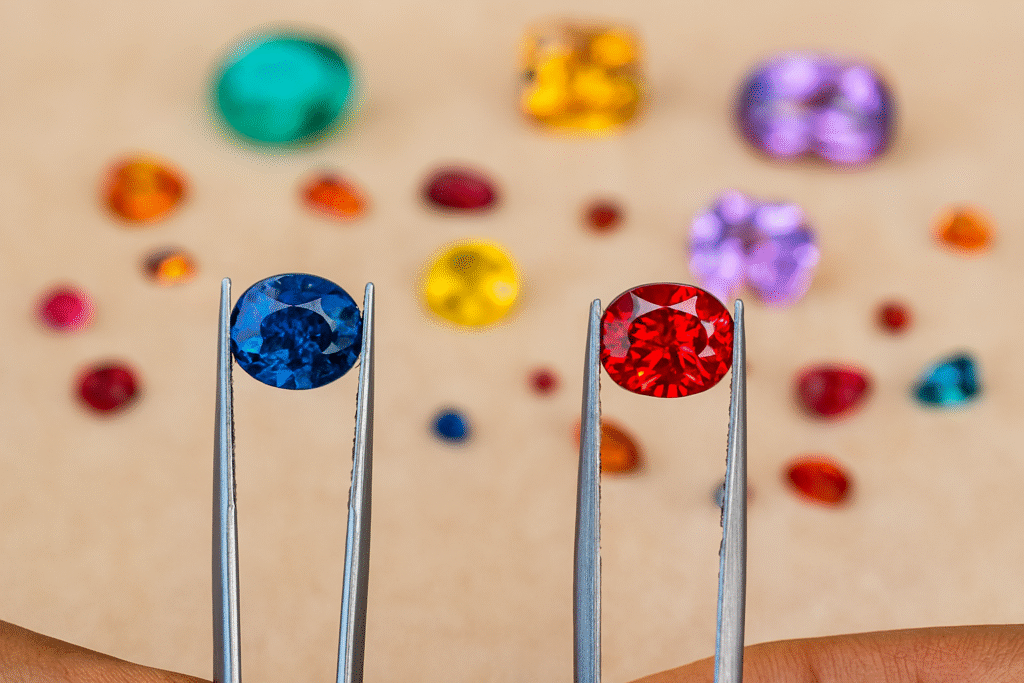
Synthetic gemstones for travel are becoming the smart choice for modern travellers. Imagine packing for your next trip—perhaps a family wedding in a bustling Tamil Nadu temple town or a relaxing vacation on a Kerala beach. You want to look elegant, but you are worried about carrying your heavy gold and diamond lockers.
Consequently, Synthetic Gemstones have surged in popularity as the ultimate travel solution. Unlike costly natural stones, these lab-created beauties offer stunning looks without the stress. But why exactly are they ideal for the traveler? In this post, we will explore their affordability, durability, and the peace of mind they offer. Whether you are a gemology fan or a savvy shopper in South India, discover how these gems allow you to sparkle on the go without the risk.
The Low-Risk Choice for Globetrotters
First and foremost, affordability acts as a shield against anxiety. Synthetic gems are mass-produced in controlled labs, slashing costs compared to rare natural counterparts mined from the earth. For instance, a vivid synthetic sapphire necklace might cost just 10% of a natural one.
This lower price tag translates directly to reduced risk. If your earrings vanish at a crowded Mumbai market or get lost in airport security, the financial sting is minimal. Travelers often face theft or simple forgetfulness. Therefore, opting for synthetics lets you enjoy bold styles without second-guessing every step. In South India, where we obsess over gold purity (22K vs. 24K), synthetics allow you to sidestep the investment worry entirely and focus purely on the fun of dressing up.
Unmatched Durability: Tougher Than Glass
Beyond cost, durability makes synthetic gemstones a traveler’s best friend. Many people mistakenly think “Synthetic” means “Fake” or “Plastic.” However, this is incorrect. These lab-created stones boast identical chemical, physical, and optical properties to naturals.
- Moissanite is almost as hard as Diamond.
- Synthetic Corundum (Ruby/Sapphire) is harder than steel.
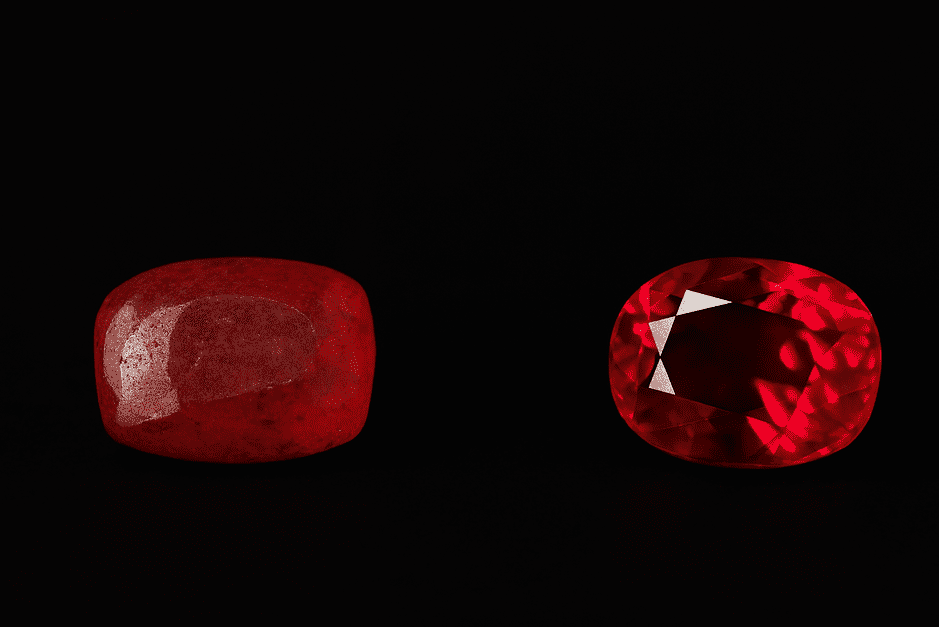
Moreover, because they are engineered without nature’s internal flaws (inclusions/cracks), they endure daily wear better. A synthetic ruby ring withstands suitcase rattles better than a heavily included natural ruby, which might crack. For frequent flyers hitting Goa parties or Himalayan treks, this reliability means no chips or scratches.
Stunning Appearance with Lab Precision
What truly captivates is their flawless beauty. Grown in ideal conditions, synthetic colored stones show even color distribution and vivid hues that often outshine naturals to the naked eye. A lab-grown Emerald’s rich green glows consistently, free from the cloudy “jardin” that plagues many mined stones.
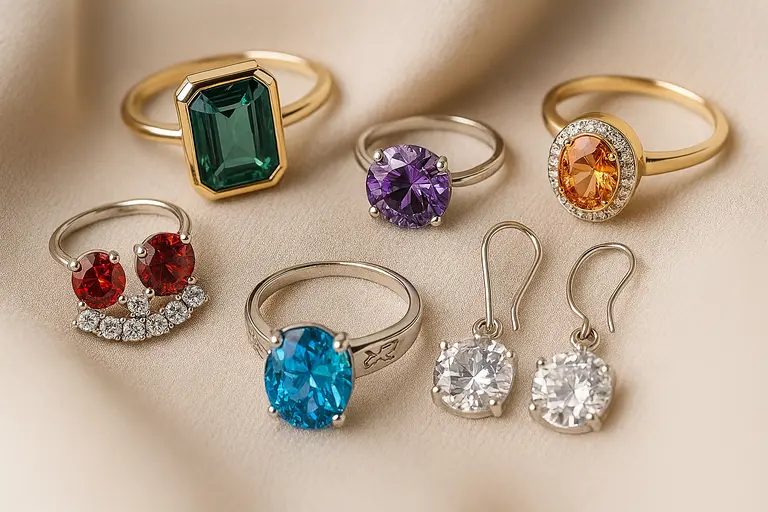
Consequently, they elevate your travel wardrobe effortlessly. You can pair synthetic Tsavorite Garnets with ethnic wear for Onam festivals, or blue synthetics with beach kurtas. In most cases, no one can spot the difference without a microscope. This visual parity ensures you travel in fine-jewelry style without the premium price tag.
Peace of Mind: The Ultimate Luxury
For many buyers, synthetic gemstones for travel remove the fear of loss, theft, and damage while on the move—travel anxiety peaks when you are carrying valuables. In contrast, synthetics eliminate this fear. You can slip on a synthetic Opal pendant for a Rajasthan safari without constantly touching your neck to check if it is still there. This freedom enhances every journey, letting you focus on memories, not mishaps.
Additionally, there is an ethical angle. Lab creation avoids mining’s environmental toll—like habitat destruction in African ruby pits. For the conscious traveler, this is responsible luxury.
Global Producers: Where Do Synthetic Gemstones Come From?
It is important to understand the global supply chain to know what you are buying. Today, most synthetic colored stones used in travel jewelry come from a few powerful hubs.
- China: With Wuzhou in Guangxi acting as the “World Capital of Synthetic Gemstones,” China leads in mass‑produced Cubic Zirconia (CZ) and Moissanite. Major manufacturers like Tianyu Gems keep the supply affordable.
- Europe & Russia: Established brands focus on high technology. Swarovski (Austria) is renowned for precision-cut crystals, while Russian firms (like RusGems/RG Crystals) are masters of Hydrothermal Emeralds and Sapphires that look incredibly real.
- USA: Companies like Chatham have built a reputation for premium synthetic-colored stones (flux/hydrothermal).
- India: India plays a vital role as a cutting center and is emerging as a giant in CVD Lab-Grown Diamonds, creating a supply chain that keeps these gems accessible.
Key Considerations Before Buying
However, you must balance enthusiasm with awareness.
- No Investment Value: Synthetics will not appreciate like rare naturals. They serve fashion, not finance. View them as “joyful accessories,” not family heirlooms.
- Transparency: Reputable sellers disclose origins. Always insist on knowing if a stone is synthetic. While naked-eye checks fail, simple tools like UV light can often distinguish them.
If you are buying in India, ensure the seller explicitly writes “Lab-Grown” or “Synthetic” on the bill.
FAQ – Synthetic Gemstones for Travel
Are synthetic gemstones as durable as natural ones?
Yes. Since they share the same chemical properties, a synthetic Sapphire is just as hard (Mohs 9) as a natural one, making it very tough for adventures.
Can synthetic gemstones pass as natural to others?
Visually, yes. For casual wear or photos, they look perfect. Only a professional with a loupe or microscope can usually spot the difference.
What synthetic gemstones suit South Indian jewellery styles?
Synthetic Rubies (Kempu) and Spinels mimic traditional temple jewelry beautifully. They provide the deep red color required for dance costumes or weddings at a fraction of the cost.
Do synthetic gemstones have resale value?
No. Their resale value is minimal to zero. Buy them for enjoyment, not investment.
Author Bio
P.J. Joseph, also known as Saju Elizamma, Gemstone & Gold Consultant serving Kerala, Tamil Nadu, and Karnataka.